Introduction: Something Big Just Happened in Publishing
Let me ask you something. Have you ever written a story a real one, something you poured your heart into only to hit a wall the moment you tried to share it with the world?
Maybe you sent out query letters and got nothing back. Maybe you paid a service that overpromised and underdelivered. Or maybe you just didn’t know where to start, and the whole publishing world felt like a locked room with no key.
You’re not alone. Millions of authors face the same frustration every single year.
That’s exactly why the Frontline Publishing launch announcement matters. It’s not just another platform entering a crowded space. It’s a genuine shift in how authors especially first-time writers can go from a manuscript on their laptop to a book in readers’ hands.
In this blog, we’re going to walk through everything you need to know: what changed in publishing, why this launch is significant, what the platform actually does, and most importantly, what it means for you as an author. Let’s get into it.
1. The Publishing World Has a Problem — And Authors Are Paying for It
Here’s the reality no one in traditional publishing really likes to talk about: the system was built for gatekeepers, not creators.
Think about it. A writer finishes a book sometimes after years of work and then what? They hunt for a literary agent. The agent pitches to publishers. The publishers deliberate. Contracts get negotiated. Edits happen. And somewhere in all of that, the author loses a massive chunk of creative control and financial return.
The average time from manuscript to bookstore shelf in traditional publishing? Anywhere from one to three years. And that’s if you’re lucky enough to get picked up in the first place.
For independent or first-time authors, the odds are stacked against them. According to publishing industry data, a typical literary agent receives thousands of query letters a year and signs only a handful of new clients. The rejection rate is staggering.
So what happens to all those stories? A lot of them never get told.
That’s the problem Frontline Publishing set out to solve. And with the Frontline Publishing launch announcement, we’re starting to see what a real solution looks like.
2. The Rise of Author-Centric Platforms
Here’s where things start to get exciting.
Over the last decade, the publishing industry has quietly been undergoing a revolution. Digital platforms changed music. They changed film. And now, they’re changing books.
Self-publishing platforms gave authors the ability to upload and sell their work directly. E-readers made digital books mainstream. Print-on-demand services eliminated the need for massive upfront print runs. One by one, the old gatekeepers lost their grip.
But here’s the thing most of these tools still left authors figuring out a lot on their own. You could self-publish, sure. But then you needed to find your own editor. And a cover designer. And a formatter. And a distributor. And then somehow market the whole thing.
It’s like being handed all the ingredients for a gourmet meal but no recipe, no kitchen equipment, and no chef’s training.
That’s the gap in the market. And it’s a big one.
What authors actually need isn’t just access to publishing they need a complete, guided system that takes them from manuscript to market without making them feel like they need a business degree to navigate it.
3. Why Frontline Publishing Was Built
Every great platform starts with a real problem. Frontline Publishing started with a simple but powerful question: Why is it so hard for a talented writer to become a published author?
The answer, after looking at the market honestly, came down to three things:
First, the publishing process is fragmented. Authors have to stitch together services from a dozen different providers, and there’s no guarantee they’ll work well together.
Second, first-time authors are especially underserved. They don’t know what they don’t know. They need guidance, not just tools.
Third, the financial model of traditional publishing is skewed heavily against creators. Authors often receive royalties as low as 10–15% of net sales, with publishing houses and agents taking the rest.
Frontline Publishing’s answer was to build something different an end-to-end author support system that handles everything under one roof, while keeping the author at the center of every decision.
The platform’s core mission is simple: empower writers to turn their manuscripts into published books with professional support, without the traditional barriers that have held so many back.
4. The Official Launch: What’s Actually on the Table
So what exactly was introduced when the platform went live? Let’s break it down.
The Frontline Publishing launch announcement unveiled a full digital publishing ecosystem designed specifically with authors in mind. Not with publishers in mind. Not with investors in mind. With authors in mind.
Here are the key highlights:
An Author-First Philosophy
Every feature on the platform was designed with one guiding principle: the author should never feel lost. From the moment you upload your manuscript to the moment your book goes live, there’s a clear, structured path forward.
End-to-End Publishing Services
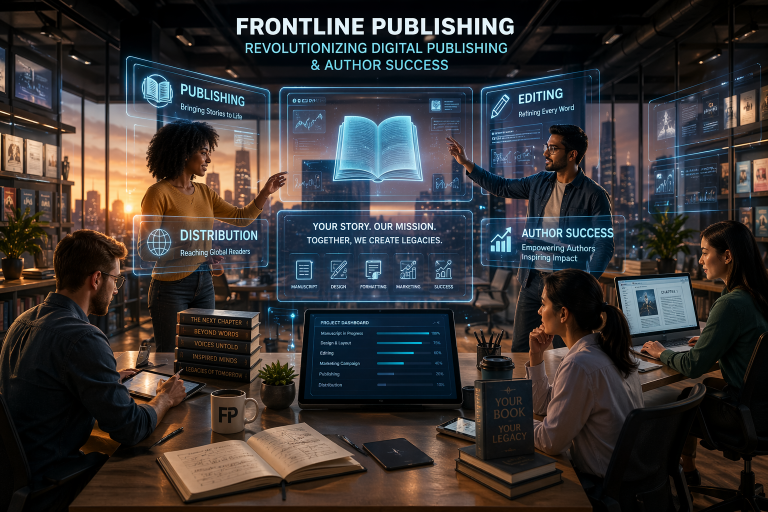
This is the big one. Rather than forcing authors to find and coordinate multiple vendors, the platform brings everything together: editing, proofreading, book design, formatting, publishing, and distribution. You work with one team through one system.
A Digital Author Dashboard
Think of this as your publishing command center. You can track where your manuscript is in the process, communicate directly with the editorial team, see timelines, and review work at every stage. No more emailing back and forth and wondering if anyone got your message.
Multi-Format Support
Whether you’re interested in eBooks, print-on-demand, or both, the platform handles the technical side of formatting and distribution across multiple channels and markets.
5. Core Features That Set It Apart
Let’s get a bit more specific, because the details matter here.
5.1 Manuscript Editing and Proofreading
Professional editing is often the single most expensive part of the independent publishing process. A good developmental edit can cost thousands of dollars, and many first-time authors skip it entirely which shows in the final product.
Frontline Publishing integrates editorial services directly into the platform. That means your manuscript gets professional eyes on it as part of the overall book publishing services package, not as an expensive add-on you have to budget for separately.
5.2 Book Design and Formatting
A book’s cover is the first thing a reader sees. Interior formatting affects how readable and professional the final product feels. These things matter a lot.
The platform connects authors with design professionals who understand both aesthetics and the technical requirements of different publishing formats. Whether you’re formatting for Kindle, print, or both, the output is optimized.
5.3 Publishing and Distribution Support
Once your book is ready, it needs to actually get to readers. This means navigating ISBNs, distribution agreements, metadata, and platform-specific requirements. The platform handles all of this, opening up access to global distribution channels that would otherwise require a publishing house to access.
5.4 Marketing and Visibility Tools
This is where a lot of self-publishing platforms drop the ball. They get your book published, and then nothing. You’re on your own to figure out how to sell it.
Frontline Publishing’s approach is different. Marketing support including book launch strategy, online promotion, and reader engagement techniques is part of the ecosystem. Because a great book that nobody knows about doesn’t help anyone.
6. What This Means for First-Time Authors
Let’s talk about the people who stand to benefit most: writers who’ve never published before.
If you’re a first-time author, the publishing world can feel genuinely intimidating. There’s so much jargon. So many steps. So many ways to make expensive mistakes.
Here’s what the platform changes for you specifically:
You don’t need to know everything upfront. The step-by-step guidance built into the platform means you’re never left staring at a blank form wondering what to do next.
You don’t need a huge budget. Because services are integrated rather than piecemeal, you avoid the premium pricing that comes with sourcing everything individually.
You don’t need industry connections. The traditional publishing world runs on relationships. Who you know matters as much as what you write. Author-centric platforms break that dependency and let the work speak for itself.
You get professional results. This isn’t about lowering the bar it’s about making professional-quality book publishing services accessible to more people. The editing is real editing. The design is real design. The distribution is real distribution.
7. A Story Worth Telling — The Author Experience
Let me paint a picture for you.
Imagine a woman named Sarah. She’s a retired teacher who spent twenty years helping kids fall in love with reading. For just as long, she had a novel sitting in a folder on her desktop a story about The Secret of Secrets characters she created: a group of unlikely young heroes navigating a world that kept rewriting its own rules. She never published it because she didn’t know how, and the few times she looked into it, the process felt overwhelming.
With a platform like this, Sarah’s path looks completely different. She submits her manuscript through the dashboard. An editor reviews it and gives her structured feedback. She works through revisions. A cover designer creates something that actually captures the feel of her story. The book gets formatted for both print and digital. It goes live on major platforms worldwide.
Six months after she starts, Sarah holds a printed copy of her book.
That’s the story this platform is designed to make possible. And for every Sarah out there — every writer sitting on a finished or half-finished manuscript — this kind of support changes everything.
8. The Technology Behind the Platform
One of the most interesting aspects of this launch is how technology has been woven into the process without making it feel cold or impersonal.
The digital author dashboard isn’t just a status tracker it’s a communication hub. Authors can message their editorial contacts, receive feedback, approve design drafts, and manage their entire project in one place. No juggling email threads across five different vendors.
The platform also uses automation in areas where it makes sense things like file conversions, formatting checks, and distribution submissions freeing up human attention for the parts that actually require it, like editorial feedback and creative design decisions.
This balance between technology and human expertise is intentional. Publishing is, at its core, a creative endeavor. The best platforms support that creativity rather than trying to mechanize it away.
The digital publishing innovation announcement on PRLog highlighted this balance specifically, noting how the platform’s infrastructure was built to reduce friction for authors while maintaining the kind of quality standards that matter to readers.
9. Press Coverage and What It Tells Us
The platform’s launch drew coverage across multiple outlets, which is a good sign for an industry that doesn’t always embrace change quickly.
The digital publishing innovation announcement on PRLog focused specifically on how the platform’s technology-driven workflow represents a meaningful step forward not incremental improvement, but a genuine rethinking of how book publishing services can be delivered in the digital age.
The OpenPR coverage emphasized the full-spectrum nature of the platform that it wasn’t just solving one part of the author’s journey, but attempting to address the entire thing from manuscript to market.
Both pieces pointed to the same underlying truth: the industry is ready for this. Authors are ready for this. The question has always been whether someone would actually build it properly.
10. How This Compares to What Came Before
To really appreciate what’s happening here, it helps to compare it to what the alternatives look like.
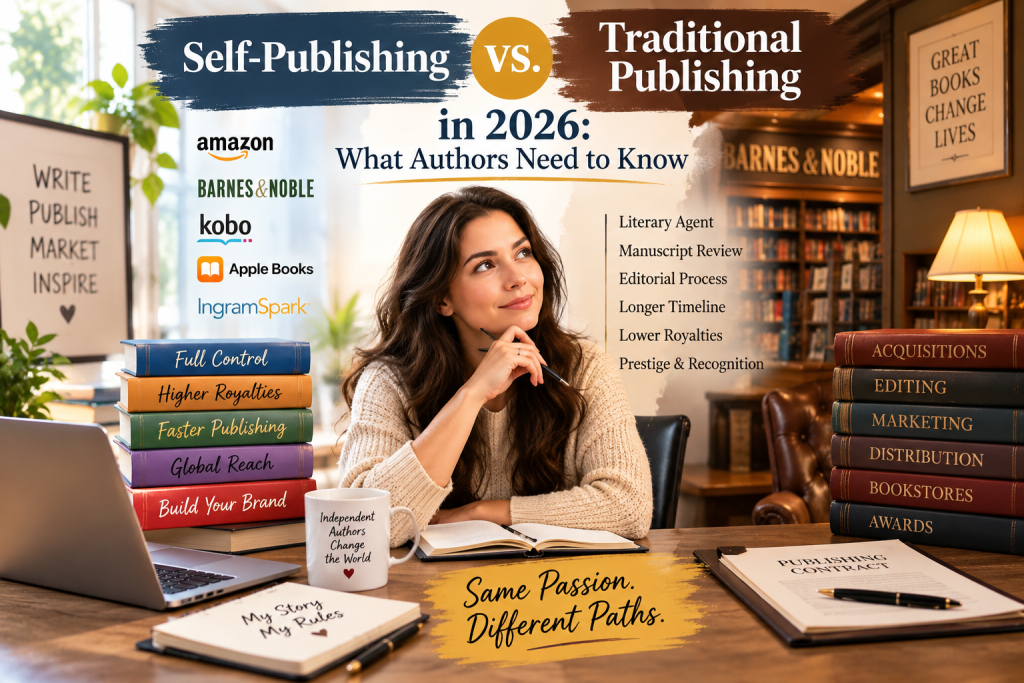
Traditional publishing offers prestige and distribution, but demands that authors give up significant creative control and financial upside — and it’s not accessible to most writers.
Pure self-publishing offers control, but requires authors to be their own project managers, marketers, and quality controllers a full-time job on top of the writing.
Vanity presses take your money and give you books, but the quality is often poor and the support is minimal.
What Frontline Publishing offers is something genuinely different: the professional support and quality standards of traditional publishing, combined with the author ownership and control of self-publishing, delivered through a streamlined digital platform.
It’s not perfect no platform is but the model makes sense, and the execution, based on what’s been announced, seems thoughtful.
11. The Bigger Picture: Where Publishing Is Heading
Let’s zoom out for a second.
The shift that Frontline Publishing represents isn’t just about one company. It’s part of a larger movement reshaping the entire publishing industry.
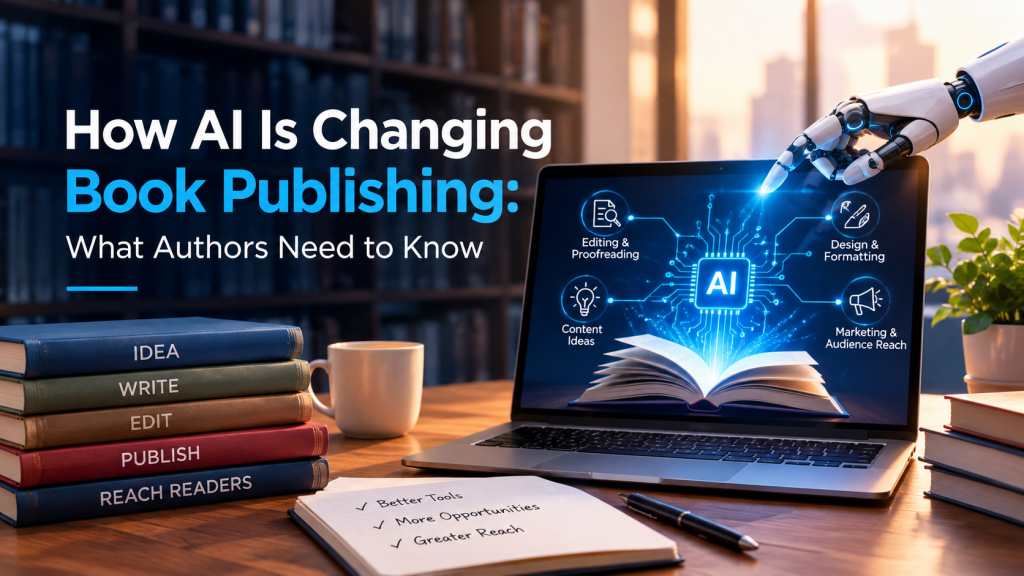
We’re seeing a growing preference for hybrid publishing models systems that combine the best elements of traditional and self-publishing. We’re seeing AI-assisted tools enter the editorial process (though human judgment remains essential). We’re seeing global distribution become increasingly accessible to independent authors.
The authors winning in today’s market aren’t necessarily the ones with the biggest publishing house behind them. They’re the ones who understand how to build an audience, how to produce consistently high-quality work, and how to use the available tools effectively.
Platforms that make those tools genuinely accessible not just technically available, but actually usable by someone without a background in publishing are going to matter more and more.
12. Why You Should Pay Attention Right Now
Here’s the honest pitch, and I’ll keep it simple.
If you’re an author — published, unpublished, experienced, or brand new the emergence of platforms like this one changes your options.
You no longer have to choose between “wait indefinitely for traditional publishing to notice you” and “figure everything out yourself.” There’s a middle path now, and it’s becoming more well-paved every year.
The characters you’ve created whether they’re heroes like The Secret of Secrets characters or something entirely your own deserve to reach readers. The stories sitting in your documents folder deserve to be books. The ideas you’ve been developing deserve professional treatment.
The question isn’t whether the publishing world is changing. It clearly is. The question is whether you’re positioned to take advantage of that change.
13. Conclusion: A New Chapter Is Being Written
We started this blog with a simple question: have you ever written something and then hit a wall trying to share it?
The wall hasn’t disappeared entirely. But it’s lower than it’s ever been, and platforms like Frontline Publishing are actively working to lower it further.
The Frontline Publishing launch announcement signals something real: a genuine commitment to rebuilding the author-publisher relationship on fairer, more transparent terms. An acknowledgment that the old model wasn’t working for most writers. And a concrete attempt to do something about it.
The future of publishing isn’t locked behind the doors of a Manhattan skyscraper. It’s digital. It’s accessible. And increasingly, it’s on the author’s side.
If you’ve been waiting for a sign to take your writing seriously to finally pursue that manuscript, to push that idea forward this might be it.
Your story matters. Now there are better ways to tell it.
Frequently Asked Questions
What is Frontline Publishing? It’s a digital publishing platform designed to support authors through every stage of the publishing process from manuscript editing and book design to distribution and marketing all through one integrated system.
How does the platform support authors? Through a digital author dashboard, integrated editorial services, professional design support, multi-format publishing, and marketing tools. Authors can track their project’s progress in real time and communicate directly with their publishing team.
Is it suitable for first-time writers? Absolutely. The platform was built with first-time authors specifically in mind. The step-by-step structure and dedicated support make it accessible even if you’ve never navigated the publishing process before.
How does this differ from self-publishing platforms? Unlike bare-bones self-publishing tools, this platform provides professional human support at every stage not just the technical infrastructure to upload a file. Think of it as the difference between being handed a blank canvas and being given a guided studio session with professional artists.
Where can I learn more? Check out the official press releases on OpenPR and PRLog for full platform details, and explore the publishing services page to understand what’s available for your project.