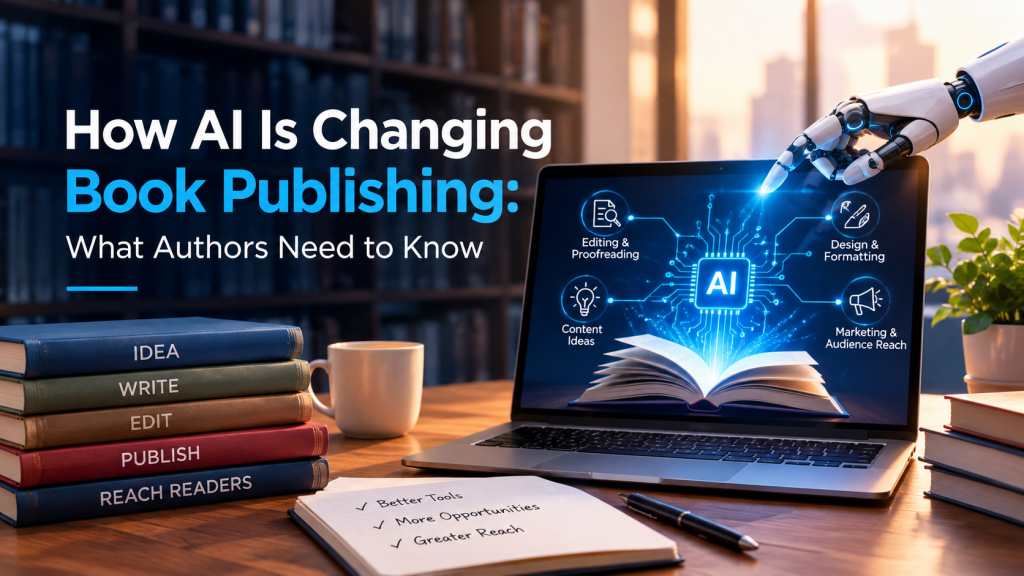
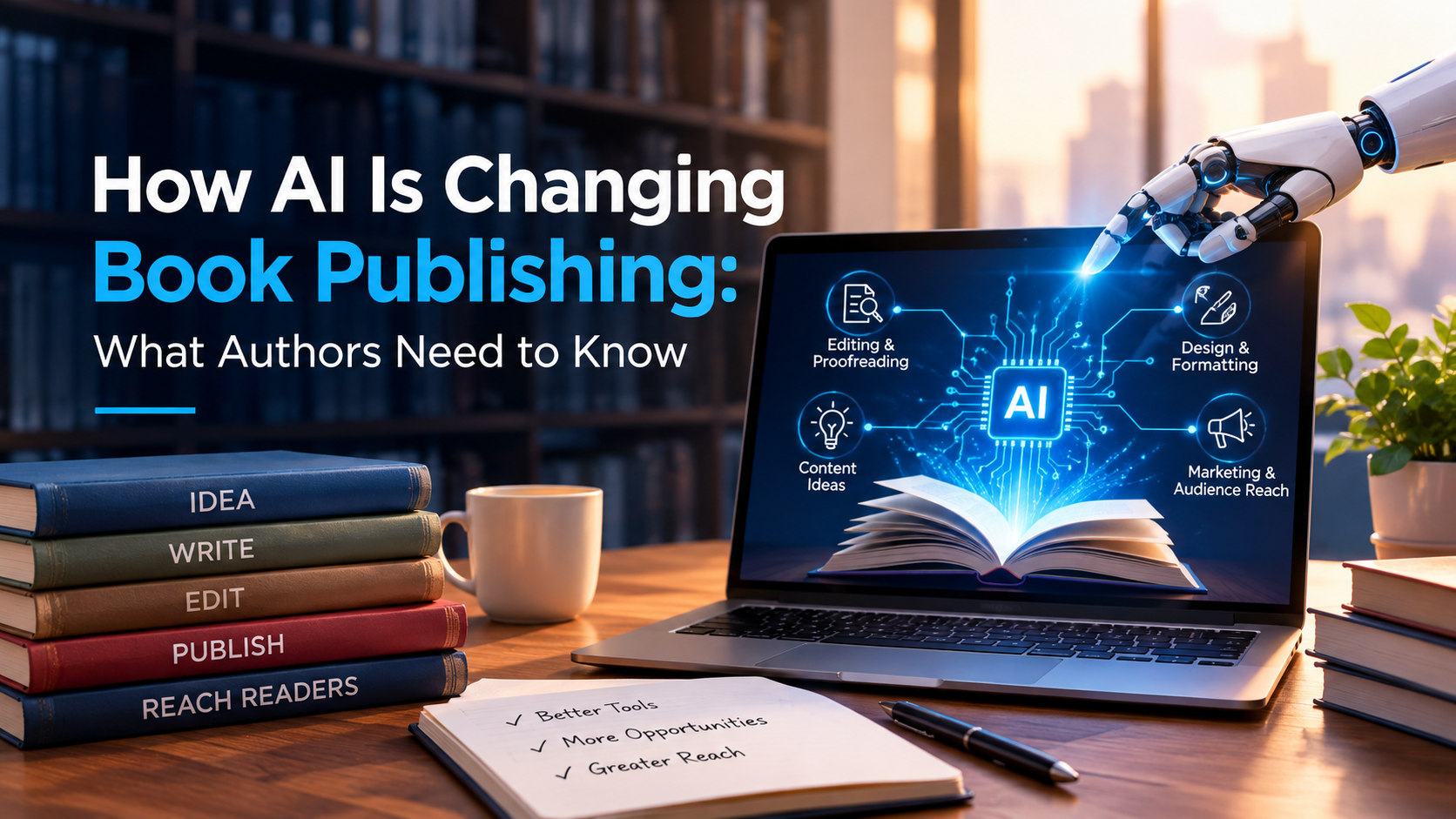
AI tools now touch almost every stage of publishing, from editing and cover concepts to metadata and marketing copy. For authors, that raises two questions: where can these tools genuinely help, and where can they put a book at risk?
At Frontline Publishing, an independent publisher based in New York that has worked with authors since 2000, our view is simple. AI can support a book, but the author’s voice and human editorial judgment have to stay at the center. This guide covers what is changing, what the rules say, and how to use these tools safely.
AI-Assisted vs. AI-Generated: Why the Difference Matters
AI-assisted work means the author writes and shapes the book, and tools help with tasks such as brainstorming, outlining, or catching errors. AI-generated work means a tool produces the actual content, whether text, images, or translations.
The distinction affects quality, reader trust, copyright protection, and what retailers require you to disclose. Readers can usually tell when a book has no real person behind it, and that loss of trust is hard to win back.
How AI Is Changing Each Stage of Publishing
Writing and Brainstorming
Authors use AI to explore concepts, test outlines, and get past blank-page moments. The risks are repetition, clichés, and confident-sounding mistakes. Anything a tool suggests should be checked, and the final words should be yours.
Editing and Proofreading
Tools can flag spelling, grammar, and sentence-level issues quickly. They can’t judge pacing, structure, tone, or whether a chapter actually works. That is why a professional book editor and a proofreader still matter, even for authors who use software for a first pass.
Cover Design and Illustration
AI can generate concept art in minutes, but questions about originality, ownership, and licensing remain unsettled. A professional cover designer can turn rough ideas into a cover that is original, consistent with your brand, and ready for print and retail.
Marketing and Promotion
Many authors use AI to draft book descriptions, social posts, and promotional ideas. These work best as first drafts. Generic copy rarely helps a book stand out, so a real book marketing strategy should still set the direction.
Metadata and Distribution
Publishing teams increasingly use AI to organize metadata and analyze data, which can help books get discovered by retailers and libraries. Good metadata helps, but no tool can guarantee sales or placement.
Where AI Genuinely Helps Independent Authors
Self-publishing means being author, editor, marketer, and project manager at once. Used carefully, AI can:
- Save time on routine tasks, such as newsletter drafts, chapter-title ideas, and promotion schedules.
- Lower the barrier to starting, by helping you turn scattered notes into a clear outline.
- Keep projects organized, with timelines, checklists, and reminders.
The Risks Authors Should Understand
Copyright. In January 2025, the US Copyright Office published a report concluding that purely AI-generated material, including output created from prompts alone, isn’t eligible for copyright protection. Human authorship, such as your own writing and your original selection and arrangement of material, can still be protected. The more of a book comes straight from a tool, the less of it you may be able to own. You can read the Office’s guidance on its AI and copyright page. This is general information, not legal advice, so speak to an attorney about your situation.
Accuracy. AI can invent facts, quotes, and sources that sound completely plausible. Verify every claim before it goes into a manuscript.
Privacy. Pasting unpublished chapters or private notes into a public AI tool may expose your draft. Read the platform’s data and retention terms before you upload anything.
Disclosure. Retailers set their own rules. Amazon’s Kindle Direct Publishing asks authors to tell it when a book contains AI-generated text, images, or translations. KDP counts content as AI-generated if an AI tool created it, even if you edited it substantially afterwards. Using AI to brainstorm, edit, or error-check content you wrote yourself is considered AI-assisted and doesn’t need to be disclosed. Policies change, so check the current KDP content guidelines before you publish.
Originality. Your voice is what builds a loyal readership. Flat, generic text costs you reader trust.
How to Use AI Responsibly
- Write the core of the book yourself. Use AI for support tasks, not for the ideas and voice that make the book yours.
- Choose tools deliberately. Match the tool to the task, and review its terms and privacy policy first, especially for unpublished work.
- Keep a paper trail. Save drafts, notes, and editorial feedback so you can show how the work was created if questions arise.
- Check retailer rules. Each platform has its own requirements for AI content, and they change over time.
- Get a human review. A professional editor catches the inconsistencies, pacing problems, and odd phrasing that tools miss.
How to Choose a Publishing Partner in the AI Era
If you’re hiring a publishing company, ask these questions before you sign:
- Do you use AI in editing, design, or marketing, and will you tell me exactly where?
- Who reviews AI-assisted work, and are qualified people accountable for the final result?
- How do you protect my unpublished manuscript?
- Who owns the rights to the finished book, cover, and interior files?
- Can I speak with past authors or read independent reviews?
We encourage every author to put these questions to any publisher they’re considering, including us. A reputable company will answer them clearly and in writing.
If you’re researching Frontline Publishing, you can read feedback from authors on our Trustpilot profile and on our reviews page. Because several unrelated companies use similar names, it also helps to confirm you have the right one by checking the website address: frontlinepublishing.com.
The Future: Human Judgment Stays Central
AI will keep becoming part of publishing workflows, especially in marketing, translation, metadata, and project organization. But editorial judgment, creativity, and accountability for what goes into print remain human responsibilities. Readers still respond to books that sound like a real person wrote them.
Frequently Asked Questions
Can I use AI to write my book?
You can, but there are tradeoffs. Purely AI-generated material may not be eligible for copyright protection, retailers such as Amazon KDP require you to disclose it, and readers value a distinct human voice. Most authors do better using AI for support tasks and writing the core of the book themselves.
Do I have to tell Amazon KDP if I used AI?
KDP requires disclosure of AI-generated text, images, and translations. It doesn’t require disclosure of AI-assisted work, such as using a tool to edit or error-check content you created yourself. Check KDP’s current guidelines before publishing.
Can AI replace a book editor?
No. AI can catch surface errors, but it can’t judge structure, pacing, tone, or reader experience. Human editors remain essential for a polished book.
Is it safe to upload my manuscript to an AI tool?
It depends on the tool. Some platforms store or reuse submitted content. Read the data and privacy terms before uploading any unpublished work.
How do I know a publishing company is legitimate?
Check that its website address matches the company you researched, read independent reviews, ask how it handles rights and costs, and get everything in writing before you sign.
Ready to Bring Your Book to Life?
Whether you’re polishing a first draft or preparing your next release, Frontline Publishing can help with editing, design, publishing, and marketing, with real people accountable at every stage. Talk to our team about your manuscript.