Publishing a book is one of the biggest milestones in an author’s life. Whether you’ve spent months writing your first novel or years developing a business guide, choosing the right publishing partner can shape your entire experience. That’s why so many writers begin their journey by reading reviews. They want to understand how a publishing company communicates, what services it offers, and whether it truly supports authors from start to finish.
In today’s publishing world, reviews are more than just ratings. They offer valuable insights into real experiences and help authors make informed decisions before investing their time and money. Instead of relying only on advertisements or promotional claims, many writers compare feedback from different sources to understand what working with a company is actually like.
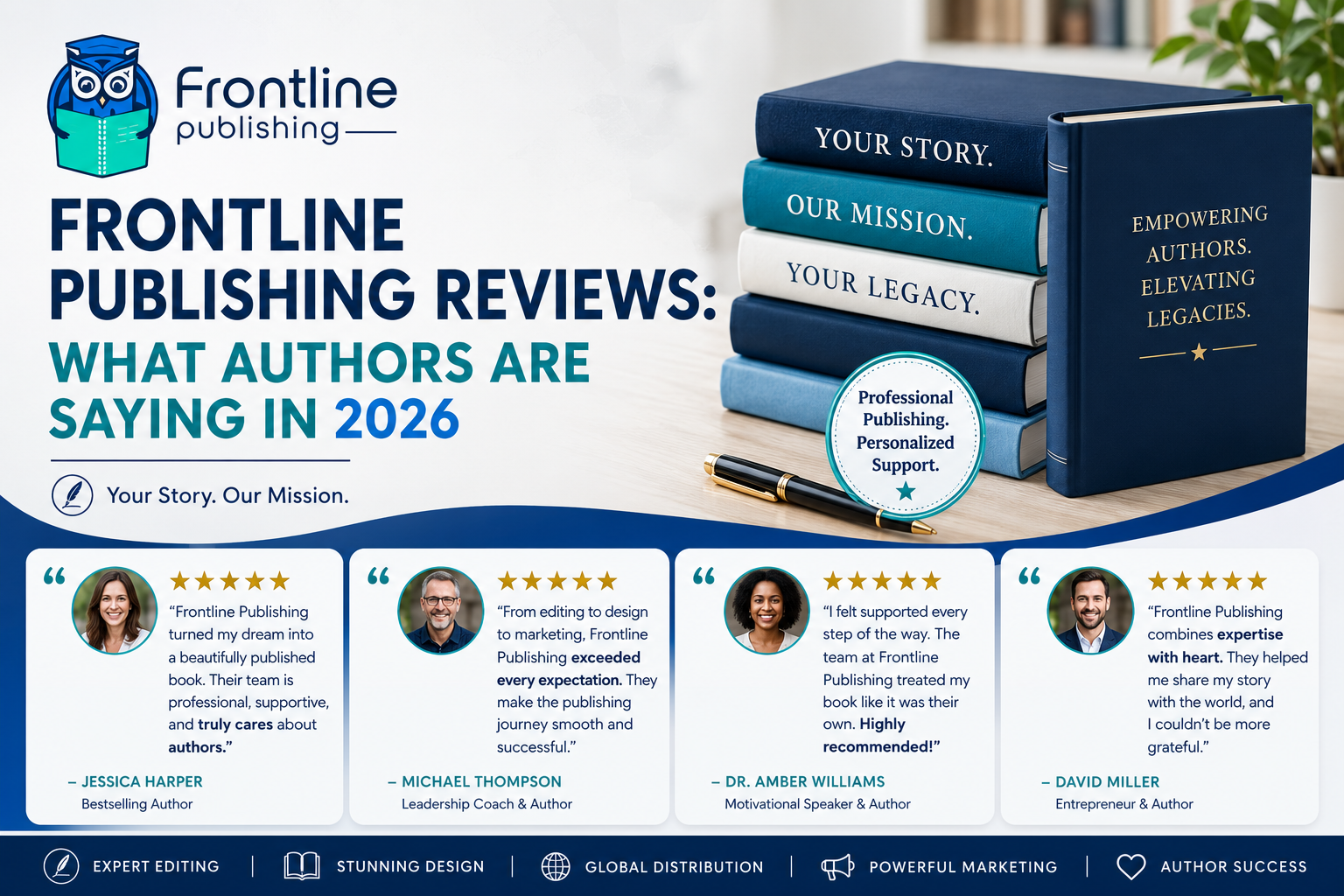
This article explores the common themes found in Frontline Publishing Reviews throughout 2026. Rather than focusing on individual testimonials, we’ll look at the patterns authors frequently mention, the services they value most, and the qualities they believe make for a positive publishing experience. We’ll also discuss how these insights fit into the broader publishing industry and what every writer should consider before choosing a publishing partner.
Throughout 2026, several public announcements have highlighted the company’s continued focus on digital publishing, author support, and expanding publishing solutions. Readers interested in the company’s latest initiatives can also explore its announcement about launching an innovative publishing platform, its new digital publishing platform, and its continued commitment to supporting authors through modern publishing services. While those announcements provide updates about company initiatives, this article focuses on the broader lessons authors can learn when evaluating publishing experiences and selecting a publishing partner.
Why Author Reviews Matter Before Choosing a Publishing Company
Every author has a different goal. Some dream of seeing their novel on bookstore shelves. Others want to publish a memoir for their family, launch a children’s book series, or establish themselves as experts through nonfiction books. No matter the goal, one decision remains the same: choosing the right publisher.
That decision shouldn’t be rushed.
Reading reviews allows you to learn from the experiences of other writers. You can often discover information that isn’t obvious on a company’s website, such as how responsive the team is, whether deadlines are met, and how the publishing process feels from the author’s perspective.
Reviews also help set realistic expectations. Publishing is a collaborative process that involves editing, design, formatting, marketing, and distribution. Understanding how a company handles these stages can give you greater confidence before signing any agreement.
Many authors also compare information from company websites with independent articles, news announcements, and publishing-related discussions to gain a well-rounded understanding before making their choice.
Publishing Is More Than Printing a Book
Many first-time authors believe publishing begins once the manuscript is complete.
In reality, that’s only the beginning.
A successful book often goes through several important stages before reaching readers. It may require developmental editing, proofreading, professional cover design, interior formatting, ISBN registration, printing preparation, eBook conversion, distribution, and marketing.
Missing just one of these steps can affect a book’s quality or visibility.
Think about buying a house. You wouldn’t purchase the first property you see without inspecting it, comparing options, and asking questions. Publishing deserves the same careful approach because your book represents your ideas, creativity, and hard work.
This is one reason authors spend time researching different companies before making a commitment. They want to know whether the team will communicate clearly, respect their creative vision, and provide guidance throughout the publishing journey.
For many writers, publishing isn’t simply about getting a book into print. It’s about building an author brand, reaching readers, and creating opportunities for future books. That long-term perspective makes choosing the right Book Publishing Company even more important.
What Reviews Can Tell You
A review is more than a compliment or a complaint.
When you read several reviews together, you’ll often notice recurring themes. These patterns can reveal what authors consistently appreciate and what questions they commonly ask during the publishing process.
Here are some of the areas reviews often help evaluate.
Communication
Clear communication builds trust.
Authors usually want regular updates about editing progress, cover design, formatting, publishing timelines, and distribution. Companies that keep authors informed throughout the process often leave a stronger impression than those that communicate only occasionally.
Good communication also helps prevent misunderstandings. When expectations are explained clearly from the beginning, both the author and the publishing team can work together more effectively.
Quality of Work
Reviews frequently mention the quality of editing, cover design, formatting, and the finished book.
A professionally produced book should not only look attractive but also provide readers with a smooth reading experience. Clean formatting, thoughtful editing, and eye-catching cover designs all contribute to how a book is received in the marketplace.
This is where Professional Book Publishing Services can make a meaningful difference. Experienced teams help refine manuscripts while preserving the author’s voice and creative vision.
Professionalism
Professionalism isn’t just about completing tasks.
It includes respecting deadlines, responding to questions promptly, explaining the publishing process clearly, and treating authors as valued partners throughout their journey.
Many writers appreciate companies that remain transparent about timelines, costs, and expectations from the very beginning.
Timelines
Publishing takes time.
Editing, revisions, design approval, formatting, printing, and distribution all require careful attention. Reviews often help authors understand whether a company generally meets agreed timelines or communicates openly when adjustments become necessary.
Knowing what to expect reduces uncertainty and allows authors to plan future marketing activities more effectively.
Overall Experience
Finally, reviews often reflect something that cannot easily be measured.
How did the author feel throughout the process?
Did they feel supported?
Were their questions answered?
Did they feel involved in important decisions?
These personal experiences often provide valuable insight into how a publishing relationship develops over time.
Reading multiple Frontline Publishing Author Reviews alongside industry news, company announcements, and independent publishing articles can help authors develop a balanced perspective. For example, several publications discuss author experiences, publishing innovations, and evolving publishing practices from different viewpoints, allowing writers to compare information before making their decisions.
What Authors Are Saying About Frontline Publishing in 2026
Every author has a unique publishing journey, but when you read reviews from different sources, certain patterns often begin to appear. While each experience is personal, many writers focus on similar aspects of the publishing process. They talk about communication, guidance, creative support, and the overall experience of working with a publishing team.
Industry publications have also discussed how author satisfaction in 2026 continues to play an increasingly important role in modern publishing. Several reports have explored how positive publishing experiences often stem from clear communication, personalized support, and long-term author relationships.
Throughout 2026, public announcements and industry discussions have highlighted the growing importance of author support, digital publishing solutions, and long-term publishing partnerships. These trends are also reflected in conversations across publishing communities, where authors increasingly value transparency, personalized service, and ongoing support after publication.
Rather than looking at one review in isolation, it’s helpful to identify the recurring themes. When similar experiences appear across multiple sources, they provide useful insight into what authors generally expect from a modern publisher.
Professional Communication Throughout the Process
Publishing a book involves many moving parts. Editing, design, formatting, production, and marketing all happen at different stages. Without regular communication, authors can quickly feel uncertain about where their project stands.
One of the most common qualities authors appreciate is clear communication from the beginning of the project to the final publication stage.
Responsive Project Managers
Authors often mention how helpful it is to have a dedicated point of contact.
Imagine you’re waiting for your first book cover design. Naturally, you’re excited, but you may also have questions or ideas you’d like to discuss. Having a project manager who responds promptly can make the entire experience much less stressful.
A responsive publishing team helps authors feel involved instead of left wondering what happens next.
Simple updates like:
- “Your manuscript has entered editing.”
- “Your cover design is ready for review.”
- “Your formatted proof is available.”
- “Distribution has begun.”
may seem small, but they build confidence throughout the publishing process.
Many authors value this level of communication because it helps them plan book launches, marketing activities, and promotional events with greater certainty.
Clear Updates at Every Stage
Good communication isn’t only about replying to emails.
It’s also about explaining each stage in simple language.
Publishing can feel overwhelming for first-time authors because there are many unfamiliar terms. ISBN registration, trim sizes, metadata, print-ready files, and distribution channels may all be new concepts.
When publishers explain these steps clearly, authors often feel more comfortable making important decisions.
For example, rather than simply requesting approval for a book proof, an experienced publishing team may explain:
- what has changed,
- why those changes matter,
- what should be reviewed before approval,
- and what the next step will be.
This educational approach helps authors become more confident throughout their publishing journey.
Transparency Builds Trust
Trust is one of the most valuable parts of any professional relationship.
Authors invest not only money but also years of creative work into a manuscript. Naturally, they want to know exactly how their project is progressing.
Transparency means explaining:
- realistic timelines,
- available publishing options,
- expected deliverables,
- pricing,
- revision processes,
- and distribution plans.
When expectations are discussed openly from the beginning, misunderstandings become much less likely.
Many Frontline Publishing Author Reviews emphasize the importance of having a publishing team that communicates honestly throughout the project instead of making unrealistic promises.
For authors, honesty creates peace of mind.
Personalized Publishing Experience
No two books are alike.
A children’s picture book requires a completely different publishing approach than a business leadership guide or a historical memoir.
That’s why many authors appreciate publishers that adapt their services to each project instead of following a one-size-fits-all process.
Supporting Fiction Authors
Novelists often spend years building fictional worlds.
They want editors who understand pacing, character development, dialogue, and storytelling.
A thoughtful publishing process helps preserve the author’s unique voice while improving clarity and readability.
Many fiction writers also value creative discussions during cover design because the cover becomes the first impression readers have of the story.
Helping Memoir Writers Tell Personal Stories
Writing a memoir can be emotional.
Authors are often sharing deeply personal experiences with complete strangers.
A supportive publishing team understands that editing isn’t about changing someone’s story.
It’s about presenting that story clearly while maintaining its authenticity.
This collaborative approach helps memoir writers feel respected throughout the editing process.
Children’s Book Authors Need Different Support
Publishing a children’s book brings unique challenges.
Illustrations.
Page layouts.
Age-appropriate language.
Educational value.
Parents and teachers often judge children’s books differently than adult fiction.
Because of this, children’s authors usually benefit from specialized guidance during illustration planning, formatting, and print production.
Many writers appreciate having professionals explain these creative decisions before production begins.
Business and Nonfiction Authors
Business professionals often publish books for a different reason.
Their goal may be:
- building credibility,
- attracting new clients,
- sharing industry knowledge,
- or establishing thought leadership.
For these authors, publishing extends beyond the book itself.
Professional branding, online visibility, author websites, and marketing strategies often become important parts of the overall publishing journey.
This growing focus reflects how today’s publishing industry has evolved beyond simply printing books.
Support Beyond Publishing
Publishing is an important milestone.
But it’s rarely the finish line.
Once a book becomes available, many authors begin asking new questions.
How will readers discover it?
How can I build my audience?
Should I create an author website?
What about interviews or media coverage?
Modern publishing increasingly includes support that extends beyond production.
Marketing Assistance
Even the best-written book needs visibility. As publishing becomes more competitive, many companies are investing in stronger digital marketing strategies, author branding, and online visibility. Industry announcements have highlighted how innovative publishing platforms are expanding the tools available to independent authors.
Many publishers now provide guidance on promotional strategies to help authors introduce their books to new audiences.
Marketing support may include:
- launch planning,
- promotional materials,
- online campaigns,
- press release guidance,
- email marketing,
- social media recommendations,
- and bookstore distribution opportunities.
These services don’t guarantee sales, but they help authors create a stronger foundation for reaching readers.
This reflects the broader publishing industry’s shift toward combining publishing with long-term marketing support.
Building an Author Brand
Today’s readers don’t simply follow books.
They follow authors.
An engaging author profile, professional website, active social media presence, and consistent messaging all contribute to long-term success.
Many authors now think beyond a single book.
They ask:
“How can I build my career?”
That’s why branding has become an increasingly important part of modern publishing.
A recognizable author identity helps readers remember your work and look forward to future books.
Distribution That Reaches More Readers
Publishing a book is only meaningful if readers can find it.
Authors frequently pay attention to how books are distributed across major online retailers and other sales channels.
A well-planned distribution strategy helps increase accessibility for readers in different regions and formats, including paperback, hardcover, and eBook editions.
This broader availability has become increasingly important as more readers purchase books online.
Preparing for a Successful Launch
Launching a book takes planning.
Experienced authors often prepare months in advance.
They organize cover reveals, schedule interviews, announce publication dates, build email lists, and connect with readers before launch day arrives.
For first-time writers, these activities may feel unfamiliar.
Guidance during this stage can make the process less overwhelming and help authors approach publication with greater confidence.
Many themes found across Frontline Publishing Reviews reflect this evolving expectation that publishers should not only help produce quality books but also provide meaningful support throughout the author’s publishing journey. As the industry continues to change, authors increasingly value partners who combine Professional Book Publishing Services with education, communication, and long-term guidance rather than viewing publishing as a single completed transaction.
Services Frequently Mentioned in Author Experiences
Every author’s publishing journey is different, but the services they value often have something in common. Writers aren’t simply looking for someone to print a book. They want guidance, expertise, and support at every stage of the process.
Whether it’s polishing a manuscript, designing a cover, or preparing a marketing strategy, each service plays an important role in helping a book reach its full potential.
Let’s explore some of the publishing services that authors frequently discuss when sharing their experiences.
Ghostwriting: Turning Ideas into Finished Manuscripts
Not every author starts with a completed manuscript.
Some have a detailed outline.
Others have years of experience they’d like to share but don’t know how to organize their thoughts into a book.
This is where ghostwriting can make a real difference.
A professional ghostwriter works closely with the author to transform ideas, notes, interviews, or rough drafts into a well-structured manuscript. The goal isn’t to replace the author’s voice—it’s to strengthen it.
Collaboration Throughout the Process
Good ghostwriting is a partnership.
The writer listens carefully, asks thoughtful questions, and learns the author’s style before writing a single chapter.
For example, imagine a successful entrepreneur who wants to publish a business book. They may have decades of experience but very little time to write. A ghostwriter helps organize those insights into clear, engaging chapters while preserving the author’s personality and expertise.
Regular meetings and feedback sessions help ensure the final manuscript truly reflects the author’s vision.
Confidentiality and Trust
Trust is essential in ghostwriting.
Authors often share personal stories, business strategies, or sensitive experiences during the writing process. A professional publishing team understands the importance of confidentiality and handles these conversations with care.
Knowing that ideas and personal information are treated respectfully allows authors to focus on telling their stories with confidence.
Preserving the Author’s Voice
Readers connect with authenticity.
Even when a ghostwriter assists with the manuscript, the finished book should still sound like the author. Experienced writers focus on capturing natural speech patterns, storytelling style, and personal experiences instead of replacing them with generic language.
When readers finish the book, they should feel as though they’re hearing directly from the author.
Editing and Proofreading: Making Every Word Count
Finishing a manuscript is a major accomplishment.
But even the best writers benefit from professional editing.
After spending months or even years working on a book, it’s easy to overlook small mistakes or awkward sentences. A fresh set of experienced eyes can make a significant difference.
Improving Grammar Without Losing Personality
Editing isn’t about changing an author’s ideas.
It’s about presenting those ideas more clearly.
Professional editors correct grammar, punctuation, spelling, and sentence structure while maintaining the author’s original voice.
Instead of making the writing sound different, they help it become stronger and easier to read.
Strengthening Structure and Flow
A well-written book guides readers naturally from one chapter to the next.
Editors look at the bigger picture by asking questions like:
- Does each chapter support the main message?
- Are ideas presented in a logical order?
- Are transitions smooth?
- Is anything missing or repeated?
These improvements create a better reading experience without changing the heart of the story.
Enhancing Readability
Readers appreciate books that are clear and engaging.
Shorter paragraphs, natural dialogue, descriptive storytelling, and consistent formatting all contribute to readability.
Professional editing helps eliminate distractions so readers can stay focused on the author’s message instead of noticing errors.
This attention to detail is one reason many writers value Professional Book Publishing Services when preparing their books for publication.
Book Cover Design: Creating a Strong First Impression
People often say, “Don’t judge a book by its cover.”
In reality, readers do exactly that.
Whether someone is browsing an online bookstore or walking through a local bookshop, the cover is usually the first thing they notice.
A well-designed cover captures attention in seconds.
Professional Branding Matters
A cover should communicate the book’s genre, tone, and purpose.
For example:
- A mystery novel creates suspense.
- A children’s book feels colorful and inviting.
- A business guide looks clean and professional.
- A memoir often reflects personal emotion.
Good design helps readers immediately understand what kind of book they’re considering.
Standing Out in a Competitive Market
Thousands of new books are published every day.
An attractive cover helps a book stand out among countless others competing for attention.
Professional designers carefully consider typography, color, imagery, and layout to create a cover that appeals to the intended audience while remaining true to the author’s vision.
Professional Formatting for Print and Digital Publishing
Formatting is one of the most overlooked parts of publishing.
Many readers never notice good formatting but they immediately notice poor formatting.
Consistent spacing, readable fonts, chapter layouts, page numbering, and properly aligned images all contribute to a professional reading experience.
Print Formatting
Printed books require careful preparation.
Margins, trim sizes, headers, footers, page breaks, and print specifications must all be accurate before production begins.
Professional formatting ensures that the finished book looks polished from the first page to the last.
eBook Formatting
Digital readers expect the same quality.
Whether someone reads on a Kindle, tablet, smartphone, or computer, the text should adjust smoothly to different screen sizes without affecting readability.
Proper eBook formatting helps ensure a consistent experience across multiple devices.
Publishing Assistance That Simplifies the Process
For first-time authors, publishing can feel overwhelming.
There are ISBNs, copyright considerations, distribution platforms, metadata, pricing, and publishing requirements to understand.
Having experienced guidance makes these steps much easier to navigate.
ISBN Registration
An ISBN gives a book its unique identity within the publishing industry.
It allows retailers, libraries, and distributors to identify the correct edition of a book.
Understanding when and how an ISBN is assigned helps authors feel more confident about the publishing process.
Distribution Across Retail Platforms
Publishing doesn’t end once a book is printed.
Readers need to be able to find it.
Modern distribution often includes availability through major online retailers, eBook marketplaces, and other book sales channels.
Authors appreciate knowing where their books will be available and how readers can access different formats.
Marketing Support Beyond Publication
Publishing a book is exciting.
Helping readers discover it is the next challenge.
Today’s publishing industry places much greater emphasis on marketing than it did even a few years ago.
Many authors now look for publishers that provide guidance after publication instead of ending the relationship once the book is released.
Author Websites
A professional website becomes the author’s online home.
It gives readers one place to learn about books, upcoming releases, events, interviews, and contact information.
It also helps authors build long-term credibility.
Press Releases
Many authors use press releases to announce book launches, publishing milestones, company updates, and major publishing initiatives. A professionally written press release can increase online visibility while helping authors reach journalists, bloggers, media outlets, and potential readers. Recent publishing announcements have also demonstrated how digital PR continues to strengthen author marketing strategies.
A well-written press release can introduce a book to journalists, bloggers, industry publications, and interested readers.
Public announcements can also help increase visibility when combined with broader marketing efforts.
Social Media Guidance
Readers enjoy connecting directly with authors.
Sharing writing updates, behind-the-scenes stories, book recommendations, and personal insights helps build lasting relationships with audiences.
Simple, consistent engagement often proves more effective than constantly promoting a book.
Amazon Listing Optimization
For many authors, Amazon is one of the most important places readers discover books.
Optimizing book descriptions, categories, keywords, and author profiles helps improve discoverability while giving readers the information they need before making a purchase.
As more writers focus on building long-term careers, they increasingly look for publishing partners that provide education as well as services. Many discussions surrounding Frontline Publishing emphasize the value of combining editorial expertise, marketing guidance, and personalized support throughout the publishing journey. Rather than viewing publication as the final destination, today’s authors are looking for partners who help them continue growing long after their books reach readers. This broader approach reflects how the role of a modern Book Publishing Company continues to evolve in an increasingly competitive publishing landscape.
Common Reasons Authors Choose Frontline Publishing
Choosing a publishing partner is a personal decision. Every author has different goals, expectations, and publishing needs. Some writers are preparing to publish their very first book, while others have already released several titles and are looking for additional support. Recent industry announcements have also highlighted continued investments in publishing technology and author-focused publishing platform services designed to improve the publishing experience from manuscript to market.
Although every publishing journey is unique, many authors look for the same qualities when evaluating a publishing company. They want a team that communicates openly, respects their creative vision, provides expert guidance, and supports them throughout the publishing process.
Let’s look at some of the reasons authors commonly value in a modern publishing partner.
Creative Control Matters
For many writers, a book is much more than words on a page.
It represents years of research, personal experiences, creativity, and dedication.
Because of that, authors often want to remain involved in important publishing decisions.
Creative control may include:
- Choosing the book title.
- Reviewing editing suggestions.
- Approving the final cover design.
- Selecting illustrations.
- Deciding on the interior layout.
- Determining pricing and publishing formats.
A collaborative publishing process allows authors to share their opinions while also benefiting from professional recommendations.
For example, an editor may suggest improving the structure of a chapter, but the author still makes the final decision about how the story is told.
This balance between professional guidance and creative freedom helps many writers feel more confident throughout the publishing journey.
One Dedicated Team Makes the Process Easier
Publishing involves many specialists.
Editors.
Designers.
Formatters.
Marketing professionals.
Project coordinators.
Distribution experts.
Without proper coordination, the process can quickly become confusing.
Many authors appreciate having one dedicated team that manages each stage of publication instead of working with multiple independent providers.
Imagine renovating your home.
Would you rather coordinate ten different contractors yourself, or work with one experienced project manager who keeps everyone organized?
Publishing works in much the same way.
When every department communicates effectively, projects usually move more smoothly, deadlines become easier to manage, and authors know exactly who to contact whenever questions arise.
Step-by-Step Guidance Builds Confidence
First time authors often describe publishing as exciting but also overwhelming.
There are unfamiliar terms.
Publishing platforms.
ISBNs.
Copyright.
Book metadata.
Retail distribution.
Marketing strategies.
Without guidance, these topics can feel intimidating.
Many writers value publishers who explain every stage in simple language instead of assuming authors already understand the industry.
A helpful publishing process often includes:
- Initial manuscript evaluation.
- Editing recommendations.
- Design consultation.
- Formatting review.
- Publishing preparation.
- Distribution planning.
- Marketing guidance.
Breaking the journey into manageable steps helps authors stay informed and confident from beginning to end.
Multiple Services Under One Roof
Publishing today extends far beyond producing a printed book.
Authors often need several different services before and after publication.
Working with one company that offers multiple solutions can simplify the entire experience.
These services may include:
- Manuscript editing.
- Ghostwriting.
- Book cover design.
- Print formatting.
- eBook conversion.
- Distribution assistance.
- Marketing support.
- Author website development.
- Press release preparation.
- Social media guidance.
Having these services available in one place allows authors to build a long-term publishing strategy instead of searching for separate providers at every stage.
Real Success Stories: Common Themes Across Author Experiences
Every author has a different story.
Some begin writing as a lifelong dream.
Others publish after retirement.
Some write to educate readers.
Others simply want to preserve family memories for future generations.
Despite these differences, several recurring themes appear when authors discuss positive publishing experiences.
First-Time Authors
Publishing a first book is often filled with excitement and uncertainty.
Many new authors worry about questions like:
“Is my manuscript ready?”
“What happens after editing?”
“How do books get onto online stores?”
“Will readers actually find my book?”
Writers frequently appreciate patient guidance during these early stages.
Clear explanations and regular communication often make the publishing process feel much less intimidating.
Experienced Authors
Experienced writers usually approach publishing differently.
They often understand the technical process and focus more on efficiency, quality, and consistency.
These authors typically value:
- Professional editing.
- Reliable production schedules.
- Effective communication.
- High-quality design.
- Marketing opportunities.
Many experienced writers also seek publishing partners who can support multiple books over the course of their careers.
Business Professionals
Business leaders, coaches, consultants, and entrepreneurs often publish books to strengthen their professional reputation.
Their goals may include:
- Sharing expertise.
- Building credibility.
- Attracting speaking opportunities.
- Expanding their audience.
- Supporting their business.
For these authors, publishing is often one part of a much larger personal brand.
Professional presentation becomes especially important because the book reflects both the author’s knowledge and their business identity.
Children’s Book Authors
Publishing for children requires careful planning.
Authors must think about:
- Age-appropriate vocabulary.
- Educational value.
- Illustration quality.
- Bright, engaging layouts.
- Durable print production.
Parents, teachers, and librarians all evaluate children’s books differently than adult fiction.
Because of this, children’s authors often appreciate publishing teams that understand these unique requirements.
Independent Writers
Independent publishing continues to grow every year.
Many writers choose this path because it allows greater flexibility, faster publishing timelines, and increased creative involvement.
Rather than following traditional publishing models, independent authors often want partners who can provide expert guidance while allowing them to retain control over important decisions.
This growing trend reflects how the publishing industry continues to evolve in response to changing author expectations.
What Makes a Publishing Company Worth Trusting?
Choosing a publisher isn’t simply about comparing prices.
Trust plays an equally important role.
A trustworthy publishing company should help authors feel informed, respected, and supported throughout the entire process.
Here are several qualities every author should look for.
Clear Contracts
Before signing any agreement, authors should understand:
- Services included.
- Project timelines.
- Payment terms.
- Copyright ownership.
- Revision policies.
- Distribution details.
Reading every section carefully helps prevent misunderstandings later.
If something isn’t clear, asking questions is always the best approach.
Transparent Pricing
Publishing costs vary depending on the services selected.
Reliable publishers explain pricing clearly instead of surprising authors with unexpected fees later.
Transparency allows writers to budget confidently while understanding exactly what they’re paying for.
Professional Communication
Good communication builds strong working relationships.
Authors should feel comfortable asking questions throughout the publishing process.
Professional publishers respond respectfully, explain procedures clearly, and provide updates when projects reach important milestones.
Portfolio of Published Books
Looking at previously published books can provide valuable insight into a publisher’s work.
Pay attention to:
- Cover quality.
- Interior formatting.
- Editing.
- Genre diversity.
- Professional presentation.
A strong portfolio demonstrates experience across different types of books and audiences.
Genuine Client Feedback
Reviews become more valuable when they appear consistently across different platforms.
Instead of focusing on one individual opinion, authors should look for recurring themes.
Do multiple reviewers mention clear communication?
Do they discuss professional editing?
Are authors satisfied with the publishing experience?
Looking for patterns helps create a more balanced understanding than relying on a single review.
Ongoing Support
Publishing shouldn’t feel like the end of the relationship.
Many authors appreciate continued guidance after publication, especially when planning future books or marketing campaigns.
Support after launch often becomes just as valuable as the publishing process itself.
Questions Authors Commonly Ask Before Choosing a Publisher
Choosing a publishing partner usually raises several important questions.
Here are some of the most common ones.
Is Frontline Publishing suitable for first-time authors?
Many first-time authors look for publishers that explain the publishing process clearly, communicate regularly, and provide guidance from manuscript preparation through publication. The most suitable choice depends on an author’s goals, budget, and the services they need.
Does Frontline Publishing offer editing services?
Publishing companies commonly provide editing options such as developmental editing, copyediting, and proofreading. Authors should review the specific services offered and discuss which level of editing best fits their manuscript before beginning the project.
Can authors keep creative control?
Many modern publishing models allow authors to remain involved in key creative decisions, including approving edits, reviewing cover designs, selecting layouts, and making final publication choices. Authors should confirm these details before signing an agreement.
Does Frontline Publishing help with book marketing?
Many publishers now provide optional marketing support, which may include author branding, press releases, promotional planning, website development, and guidance for online book listings. Authors should ask which marketing services are included and which are offered separately.
How important are reviews when choosing a publisher?
Reviews should be one part of your research not the only factor. Reading multiple sources, exploring published books, comparing services, and asking detailed questions can help you make a more informed decision. Public announcements, educational resources, and independent discussions can also provide helpful context when evaluating a publisher.
How Reviews Reflect the Changing Publishing Industry in 2026
The publishing industry has changed dramatically over the past decade. Today, authors have more publishing options than ever before, and readers are discovering books in new ways through online retailers, social media, podcasts, newsletters, and digital communities.
As these changes continue, author expectations have evolved as well. Writers are no longer looking for someone to simply print their books. They want guidance, flexibility, transparency, and long-term support.
Reviews often reflect these changing expectations. They show what authors value most and highlight the qualities that make the publishing journey more rewarding.
Let’s explore some of the biggest publishing trends shaping 2026.
Self-Publishing Continues to Grow
More writers are choosing independent publishing than ever before.
Instead of waiting months or even years for traditional publishing opportunities, many authors now prefer to take control of their publishing journey.
Self-publishing offers several advantages:
- Faster publication.
- Greater creative freedom.
- Ownership of publishing decisions.
- Flexibility in marketing.
- Ability to publish multiple books.
However, greater independence also means greater responsibility.
Authors often need support with editing, formatting, design, distribution, and promotion.
This is why many independent writers seek experienced publishing professionals who can guide them while allowing them to maintain creative control.
Digital Publishing Is Expanding
Readers no longer consume books in just one format.
Some prefer printed paperbacks.
Others enjoy reading on Kindle devices or tablets.
Many listen to audiobooks during daily commutes.
Modern publishing now includes multiple formats, allowing authors to reach readers wherever they prefer to read.
Digital publishing has also opened opportunities for global distribution, making books available to readers in different countries within a relatively short period.
As technology continues to evolve, authors increasingly look for publishing partners who understand both traditional and digital publishing methods.
Professional Editing Has Become More Important
Readers expect professionally written books.
Small mistakes that might once have gone unnoticed can now result in negative reviews online.
Professional editing helps improve:
- Grammar.
- Sentence flow.
- Chapter organization.
- Consistency.
- Readability.
A carefully edited manuscript creates a better experience for readers and helps strengthen an author’s credibility.
Many successful authors consider editing one of the most valuable investments they make before publication.
Building an Author Brand
Publishing one successful book is exciting.
Building a lasting writing career is even more rewarding.
Today’s authors increasingly think beyond a single title.
They ask questions like:
- How can readers discover my future books?
- How do I build a loyal audience?
- Should I create an author website?
- How can I connect with readers online?
Author branding helps answer these questions.
A professional website, consistent social media presence, newsletters, interviews, and speaking opportunities all contribute to long-term visibility.
Readers often become loyal followers of authors not just individual books. As more authors build their personal brands, industry discussions continue to emphasize the importance of publishing reviews combining professional publishing with long-term marketing, reputation management, and audience engagement.
Global Distribution Creates New Opportunities
Years ago, reaching readers in different countries could be difficult.
Today, digital publishing and online retailers have made international distribution much more accessible.
Authors now have opportunities to reach readers across multiple regions through print-on-demand services, eBooks, and online bookstores.
This global accessibility allows writers to build audiences beyond their local communities.
Marketing Has Become Part of Publishing
Publishing no longer ends when a book is released.
Marketing has become an essential part of the author’s journey.
Successful book launches often include:
- Press announcements.
- Author interviews.
- Social media campaigns.
- Email newsletters.
- Book signings.
- Podcast appearances.
- Blog articles.
- Reader engagement.
Many of the public announcements shared throughout 2026 demonstrate how publishing companies are also investing in author education, digital innovation, and broader publishing initiatives. These announcements help inform readers about new services and industry developments while complementing other resources authors use during their research.
Tips for Evaluating Any Publishing Company
Every author deserves a publishing partner they can trust.
Before making a decision, take time to evaluate your options carefully.
Here are a few practical tips that can help.
Read Reviews from Multiple Sources
Don’t rely on just one review.
Look for recurring themes across different websites, publishing communities, and industry resources.
Consistent feedback usually provides a clearer picture than isolated opinions.
Explore Published Books
Ask yourself:
- Do the covers look professional?
- Is the formatting clean?
- Are the books well edited?
- Does the publisher work with different genres?
Published books often demonstrate a company’s quality better than marketing materials alone.
Ask Questions Before Signing
Good publishers welcome questions.
Consider asking about:
- Publishing timelines.
- Editing process.
- Revision policies.
- Distribution options.
- Copyright ownership.
- Marketing services.
Clear answers help build confidence before beginning your project.
Understand the Contract
Never rush into signing an agreement.
Read every section carefully.
If something isn’t clear, ask for clarification before moving forward.
A transparent contract benefits both the author and the publisher.
Compare Service Packages
Publishing companies often offer different levels of support.
Compare:
- Editing.
- Design.
- Formatting.
- Marketing.
- Distribution.
- Author support.
Choose the package that best matches your publishing goals instead of simply selecting the lowest price.
Evaluate Communication
During your first conversations, notice how the company communicates.
Do they respond promptly?
Do they explain the process clearly?
Do they answer your questions thoughtfully?
Good communication at the beginning often reflects how the rest of the publishing journey will unfold.
Look for Transparency
A trustworthy publisher explains:
- Pricing.
- Timelines.
- Deliverables.
- Revision policies.
- Publishing expectations.
Transparency creates trust from the very beginning.
Be Cautious of Unrealistic Promises
No publisher can honestly guarantee bestseller status or overnight success.
Publishing is a long-term journey that depends on many factors, including book quality, audience engagement, marketing efforts, and reader interest.
Companies that set realistic expectations often build stronger relationships with authors.
Final Thoughts
Publishing a book is an exciting achievement, but choosing the right publishing partner is just as important as writing the manuscript itself.
Reviews give authors valuable insights into real publishing experiences. They help writers understand how companies communicate, support clients, and guide projects from manuscript to publication.
Whether you’re publishing your very first book or expanding an established writing career, taking time to research different publishers can make a significant difference.
Read reviews from multiple sources.
Compare services carefully.
Explore published books.
Ask questions.
Understand every agreement before making a commitment.
Most importantly, choose a publishing partner whose experience, communication style, and services align with your personal publishing goals.
A thoughtful decision today can contribute to a more enjoyable and successful publishing journey tomorrow.
Frequently Asked Questions (FAQs)
1. What do Frontline Publishing reviews say?
Many publicly available reviews and discussions focus on topics such as communication, publishing support, editorial services, and the overall author experience. As with any publisher, it’s helpful to read multiple sources to identify recurring themes rather than relying on a single review.
2. Is Frontline Publishing a legitimate publishing company?
Authors should evaluate any publishing company by reviewing its website, published books, available services, client feedback, contracts, and public announcements before making a decision.
3. What publishing services does Frontline Publishing provide?
Publicly available information indicates services may include manuscript editing, book design, formatting, publishing assistance, marketing support, and related publishing solutions. Authors should verify the current service offerings directly with the company.
4. Does Frontline Publishing help first-time authors?
Many publishing companies provide guidance for first-time authors, including explanations of the publishing process, editing, formatting, and publication planning. Prospective authors should ask about the level of support available for new writers.
5. Can Frontline Publishing assist with book marketing?
Many modern publishers offer marketing related services such as author websites, promotional planning, press releases, and social media guidance. Authors should confirm which services are included in their chosen package.
6. How do I choose the right publishing company?
Research several publishers, compare their services, read reviews from multiple sources, examine published books, ask detailed questions, and carefully review any contract before making your decision.
7. Why should I read author reviews before publishing my book?
Reviews provide valuable insight into communication, professionalism, publishing quality, and overall client experiences, helping authors make more informed decisions.
8. What makes a professional publishing company trustworthy?
Trustworthy publishers typically demonstrate transparent communication, clear contracts, realistic timelines, professional editing, quality design work, and ongoing author support.
9. Does Frontline Publishing offer editing and design services?
According to publicly available information, the company offers editing and design-related publishing services. Authors should review the latest information or contact the company directly for current details.
10. How can authors publish successfully in 2026?
Successful publishing involves much more than completing a manuscript. Authors should invest in professional editing, create a strong marketing plan, build an author platform, engage with readers, and choose publishing partners that align with their long-term goals.
Authors who are researching publishing companies may also benefit from reviewing independent industry publishing news and announcements, and educational articles alongside company websites. Looking at multiple sources provides a broader understanding of today’s publishing environment and helps writers make more informed decisions.
Conclusion
The publishing landscape continues to evolve, giving authors more opportunities and more choices than ever before. Taking the time to research publishers, understand the services offered, and learn from the experiences of other writers can help you make a confident, informed decision. A successful publishing journey is built on preparation, collaboration, and a commitment to producing the best possible book for your readers.