Finishing a manuscript is one kind of accomplishment. Figuring out who should publish it is another and it’s the decision that shapes everything that happens next: how the book looks, who can buy it, how much of the profit the author keeps, and how much control they retain over their own work.
Unlike drafting a novel, evaluating a professional book publishing company is not a creative skill. It’s closer to due diligence reading contracts carefully, asking pointed questions, and comparing concrete details rather than impressions. This guide walks through exactly what to look at, in the order it usually matters.
1. Start by Naming the Type of Publisher You’re Evaluating
Before judging any single company, it helps to know which category it falls into, because the evaluation criteria differ:
- Traditional publishers acquire the rights to a manuscript, cover production costs themselves, and pay the author royalties (and sometimes an advance). They typically only accept manuscripts through literary agents.
- Self-publishing platforms (like the major print on demand and ebook distributors) charge little or nothing upfront and let the author retain full rights and control, but the author does all the work or pays separately for editing, design, and marketing.
- Assisted or “hybrid” publishers sit in between: the author usually pays for services (editing, design, distribution) but retains more involvement and often more rights than in traditional publishing.
- Vanity presses charge authors a large upfront fee to “publish” the book with minimal editorial standards, little real distribution, and few of the safeguards a legitimate publisher provides.
A large share of author complaints trace back to a mismatch here expecting traditional-publisher treatment (free production, active marketing, curated acceptance) from a pay-to-publish service. Knowing which category you’re looking at reframes every other question below.
For example, a company like Frontline Publishing, which positions itself in the assisted/hybrid space, should be evaluated against assisted-publishing norms paid services with author involvement rather than judged as though it were a traditional acquisitions based publisher.
2. Verify the Company Actually Exists as It Claims
This sounds basic, but it catches a surprising number of problems early:
- Check business registration. In the U.S., this usually means a Secretary of State business search in the state where the company claims to be based. A company with no registration record, or one registered only months ago despite claiming “decades of experience,” is a red flag.
- Look for a real, physical presence. Not necessarily an office you can visit, but consistent, verifiable information: an address that resolves to an actual building (not a mailbox rental service without disclosure), a working phone number, and a domain registered more than a few months ago.
- Cross-check the “About” page against outside sources. If a company claims to have published a specific bestselling or well known author, verify that claim independently through the author’s own website, interviews, or public records rather than taking the publisher’s word for it.
- Search for the company name plus terms like “complaint,” “reviews,” or “refund” on general search engines, not just on the company’s own site or its own commissioned “reviews” page.
3. Read the Contract Before Anything Else
No amount of friendly correspondence substitutes for what’s actually in writing. Authors should request the full publishing agreement before paying any fee or signing anything, and should read every clause, even the ones that seem like boilerplate.
Key things to check:
- Rights. Does the author retain copyright? Are print, ebook, audiobook, translation, and film/TV rights all addressed separately, or bundled together with vague language? Some publishers claim broad rights (including future works or unrelated formats) that have nothing to do with the current book.
- Duration and termination. How long does the contract last? Is there a clear, reasonable process for the author to terminate it and get their rights back if the relationship isn’t working?
- Royalties, defined precisely. Is the royalty calculated on the cover price or on net receipts (what the publisher actually collects after retailer discounts and printing costs)? These can produce very different real-world payouts for the same percentage figure.
- Fees, all of them. Some contracts list a modest “publishing package” fee up front but bury additional charges for revisions, extra formats, marketing add-ons, or continued distribution in later pages or separate order forms.
- Exclusivity. Does the agreement prevent the author from publishing the same or a similar work elsewhere, even if this publisher does little with it?
If a company is reluctant to provide the contract until after payment, or pressures for a decision within a short window (“this rate expires today”), that pressure itself is diagnostic.
4. Examine What Editorial Support Actually Means There
Professional editing services is one of the most commonly advertised and most commonly under-delivered services in publishing. Ask specifically:
- What type of editing is included: developmental (structure, plot, argument), line editing (prose-level clarity and style), copyediting (grammar, consistency), or only proofreading (surface-level error catching)? These are different skills and different amounts of work; a package that promises “editing” without specifying which kind often means the lightest version.
- Who does the editing? Freelance editors hired per project, in-house staff, or an automated/AI pass with minimal human review?
- How many rounds of revision are included, and what happens if the author wants further changes?
- Can the author see a sample edit, or speak with the assigned editor, before committing?
A useful gut check: ask for two or three sentences of the author’s own manuscript, edited by the company, before signing anything. A serious publisher will usually accommodate this; one relying on volume rather than quality often won’t.
5. Investigate Design, Formatting, and Production Quality
Cover design and interior formatting affect how a book is perceived by both readers and retailers.
- Ask to see the portfolio, not just the company’s promotional collage, request specific book titles, then look those books up on Amazon or Goodreads and read a sample. Does the writing and design match what was represented?
- Ask which formats are supported: print (paperback/hardcover), ebook, and best audiobook services are increasingly all expected; check whether each is included or sold separately.
- Ask who owns the design files (cover art, interior layout) after the relationship ends some contracts allow the publisher to keep them, which can complicate switching publishers or self publishing later.
6. Understand Distribution Concretely
“Worldwide distribution” is one of the vaguest and most overused phrases in publishing marketing. Push past it:
- Which specific retailers and platforms will the book actually be listed on? (Amazon, Barnes & Noble, IngramSpark’s wholesale network, library systems, independent bookstore ordering systems?)
- Is distribution “available” (technically possible to order) or “active” (the publisher does something to get it stocked or promoted)? These are very different things.
- How are sales reported to the author, and how often? Is there a dashboard, or does the author have to request numbers manually?
- How and when are royalties actually paid out monthly, quarterly, only above a minimum threshold?
7. Read Reviews Skeptically, Not Dismissively
Author reviews and testimonials are useful, but only when evaluated the right way:
- Prefer specific reviews over generic praise. “They helped restructure my second act and delivered the audiobook two weeks early” is more informative than “Great experience, highly recommend.”
- Look for reviews outside the company’s own website on independent forums for authors, on the Better Business Bureau, on Trustpilot, or in writer communities where people discuss real experiences without the publisher curating which ones appear.
- Weigh negative reviews for patterns, not outliers. One dissatisfied customer can happen to any company. Multiple independent complaints describing the same issue (unexpected fees, unresponsive communication, low-quality editing) are a pattern worth taking seriously.
- Be cautious of reviews published in a burst around the same date, especially if they’re stylistically similar; this can indicate coordinated or purchased reviews rather than organic feedback.
This kind of cross-checking applies to any company under consideration. If you’re researching Frontline Publishing reviews specifically, look beyond the company’s own site to independent forums, the Better Business Bureau, and author communities, and weigh recurring, detailed feedback more heavily than isolated star ratings.
8. Ask About What Happens After Publication
Many author complaints center not on the publishing process itself but on what happens or doesn’t afterward:
- Does the company provide any marketing support, and specifically what does that include? (Author websites, press releases, social media assets, ARC/review copy distribution, retailer promotions?) Ask for concrete examples of past marketing campaigns, not general statements.
- Is there ongoing communication after the book is live, or does contact drop off once the final invoice is paid?
- What is the process if the author wants to make corrections, update the cover, or release a new edition later?
- What happens if the author wants to leave, can they take their book, retain their ISBN, and move to another publisher or self-publish it independently?
9. Compare the Total Cost Against What’s Actually Delivered
Rather than comparing sticker prices in isolation, build a simple list for any company under consideration:
| What to check | Why it matters |
| Total cost, including known add-ons | Avoids surprise invoices later |
| Rights retained by the author | Determines long-term flexibility |
| Type and depth of editing included | Affects the finished book’s quality |
| Formats supported (print/ebook/audiobook) | Determines reach |
| Distribution scope, verified concretely | Determines whether readers can actually find the book |
| Marketing support, with specifics | Determines whether the book gets discovered |
| Termination and rights-reversion terms | Determines flexibility if things go wrong |
| Independent reviews, cross-checked | Determines real-world track record |
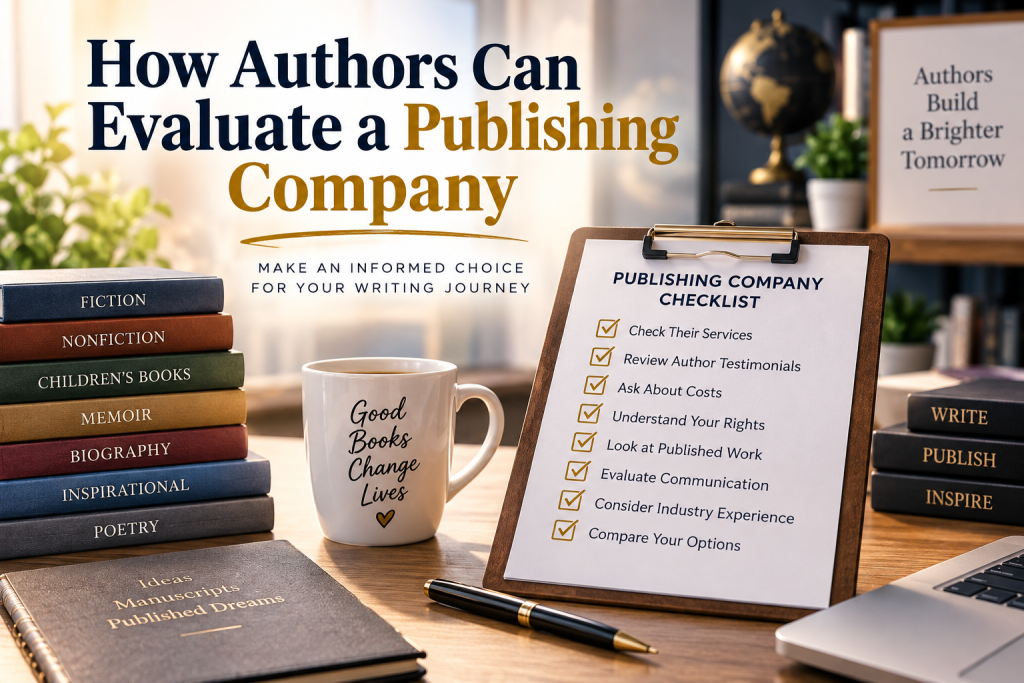
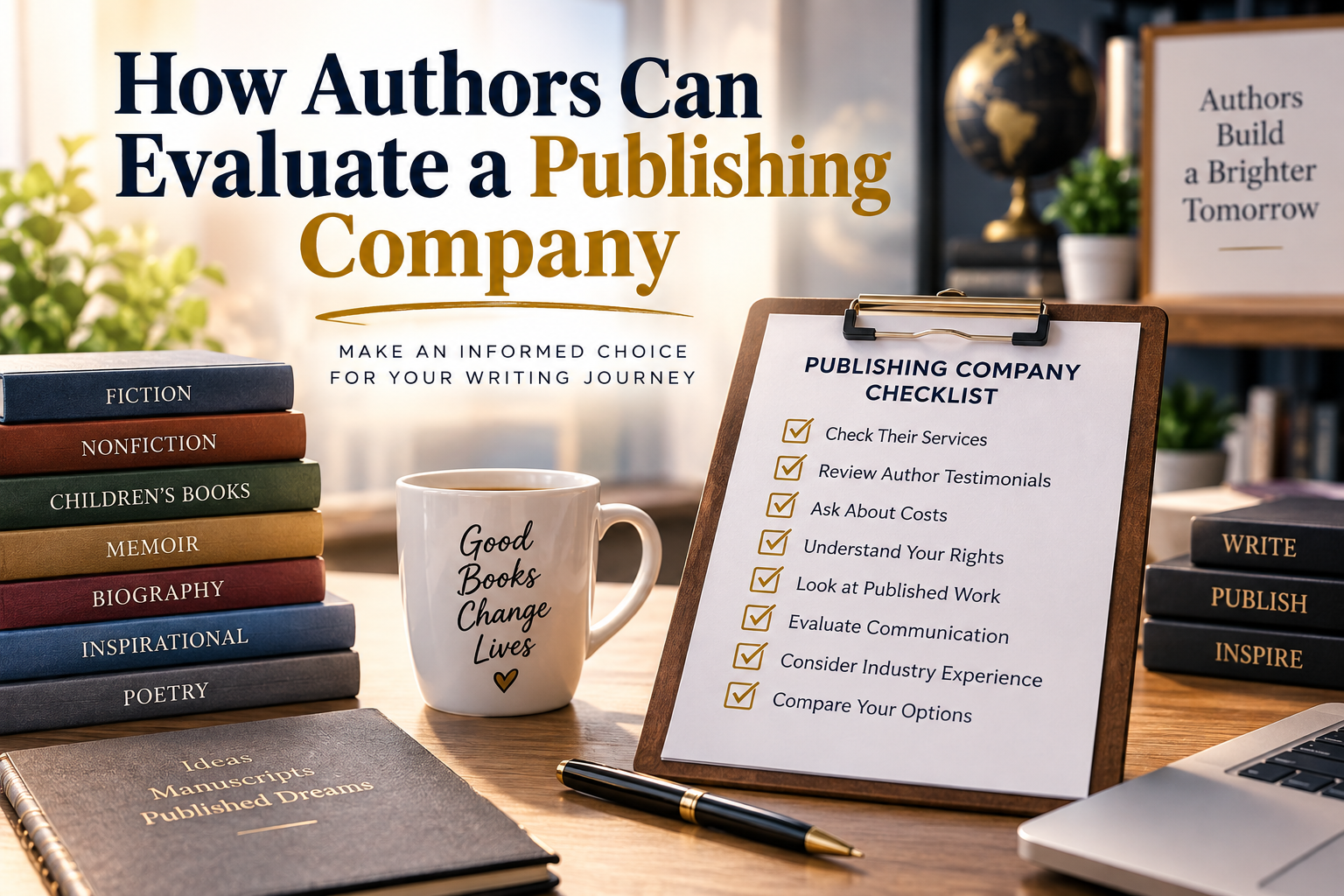
Filling this out for two or three companies side by side, using their actual contracts and sample work rather than their marketing copy, usually makes the right choice much clearer than reading another testimonial page would.
10. Trust the Process, Not the Pitch
The single most common thread among authors who report negative publishing experiences isn’t a lack of information, it’s skipping steps under time pressure, because a “limited-time” offer or an enthusiastic sales call made the process feel urgent. A publishing company confident in its own value will not object to an author taking a week to read a contract, talk to past clients, or request a sample edit.
Evaluating a publisher takes real time and a bit of unglamorous homework checking registrations, reading full contracts, verifying claims independently but it’s a one time investment that determines the experience of an entire book’s life afterward. Authors who do this legwork before signing consistently report fewer surprises, clearer expectations, and a publishing relationship they can actually rely on.
Final Thoughts
There is no universal best publishing company, only the right fit for a particular manuscript, budget, and set of goals. A memoirist who wants close editorial partnership needs something different from a business author who mainly wants fast, reliable distribution. What matters is that the decision is based on verifiable facts rather than a polished pitch: a real contract read in full, a sample edit reviewed firsthand, distribution claims checked line by line, and reviews weighed for detail and consistency rather than volume.
Companies like Frontline Publishing, and the wider field of hybrid and assisted publishers it sits alongside, are worth researching on those same terms not accepted or dismissed based on marketing alone. The questions in this guide won’t guarantee a perfect experience, but they will surface the kind of information that separates a publisher who delivers what they promise from one who simply describes it well. That distinction, more than any single feature or price point, is what ends up mattering most once the contract is signed and the real work begins.