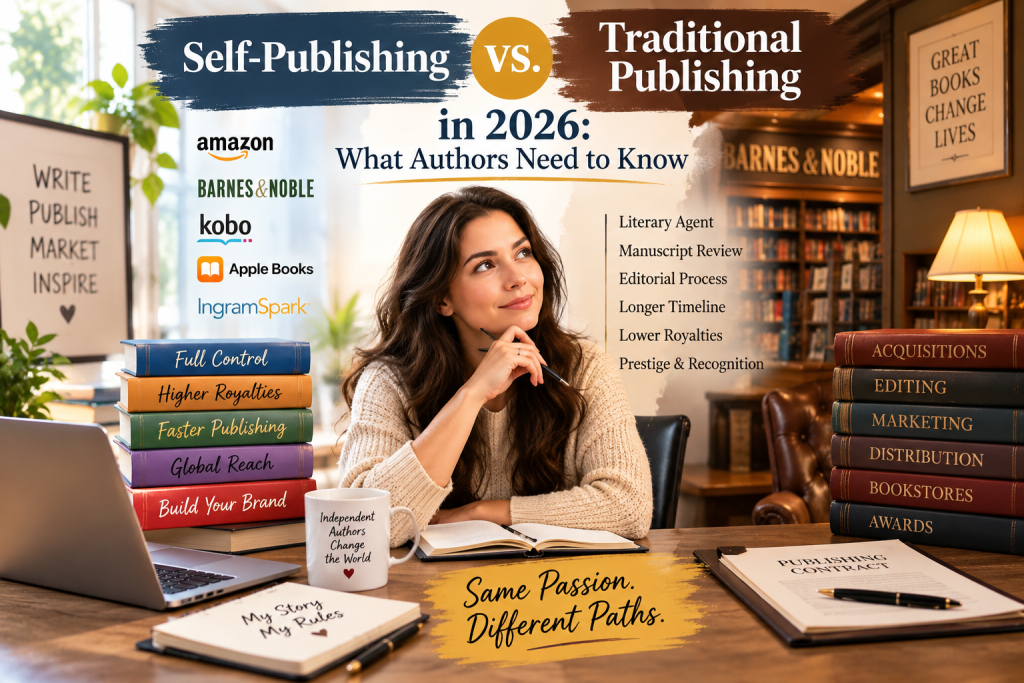
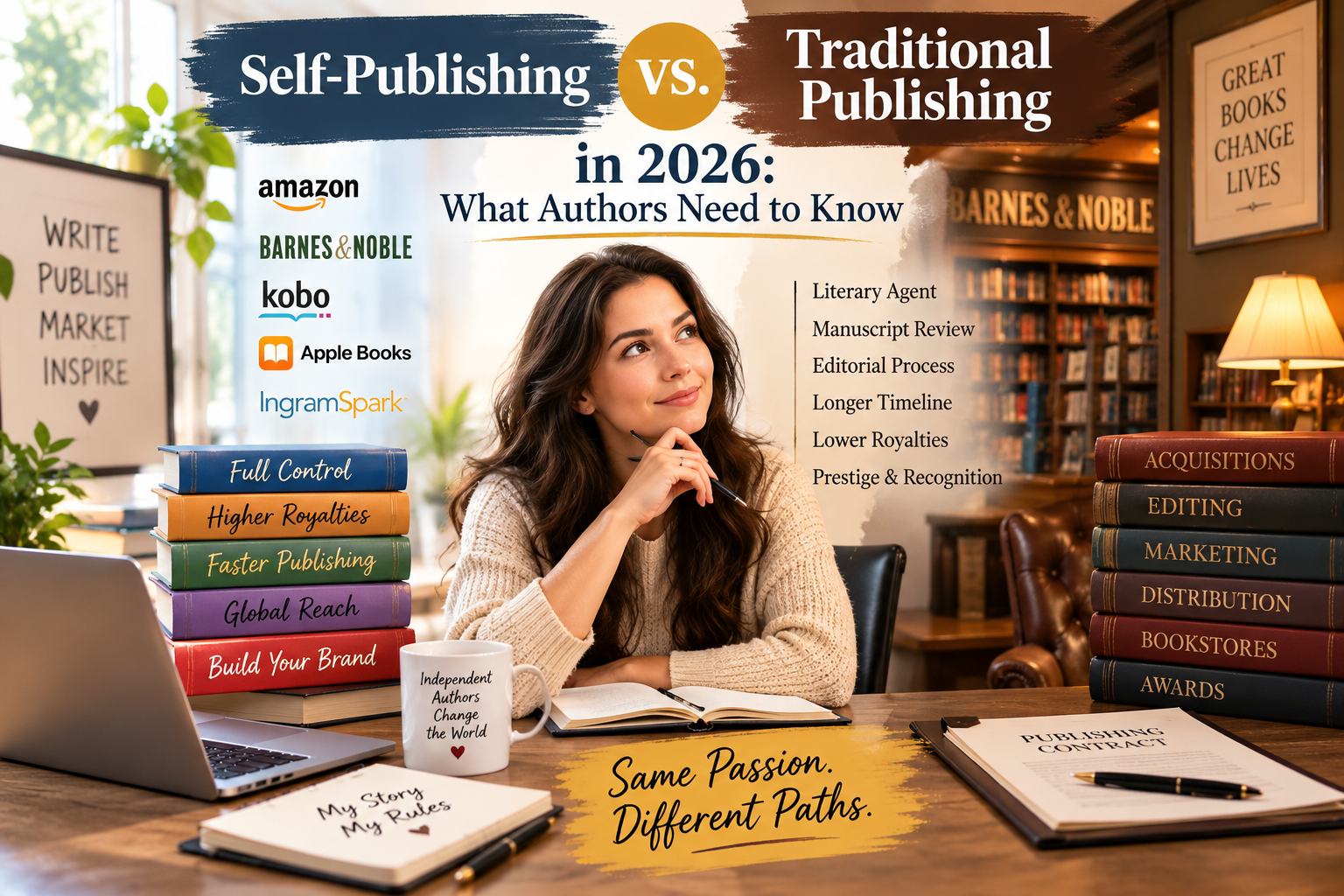
Every author eventually faces the same fork in the road: chase approval from a traditional publisher, or take control and publish the book yourself. It sounds like a simple choice, but in 2026, the line between these two paths has blurred more than ever. AI tools, global print-on-demand networks, and full-service publishing partners have changed what’s actually possible outside the traditional system, while traditional publishing itself has grown slower and more selective.
This guide breaks down what each path really involves in 2026, what it costs, who it fits best, and how to decide with confidence instead of guesswork. At Frontline Publishing, we work with authors weighing this exact decision every day, so we’ve built this comparison around the questions that actually shape the outcome.
What Is Traditional Publishing?
Traditional publishing follows a familiar structure: an author queries literary agents, an agent pitches the manuscript to publishing houses, and if a publisher acquires the book, they pay the author an advance against future royalties. From there, the publisher controls editing, cover design, formatting, printing, and distribution.
The timeline is long. Querying agents alone can take months, and once a book is acquired, it typically takes 12 to 24 months, sometimes longer, before it reaches shelves. Traditional publishing still makes sense for certain genres, authors seeking bookstore and library placement, and writers who want zero upfront production cost, accepting a smaller share of long-term earnings in exchange.
What Is Self-Publishing?
Self-publishing flips the model. The author, or a team they hire, manages editing, cover design, formatting, and distribution directly, using platforms like Amazon KDP, IngramSpark, or full-service publishing partners. There’s no gatekeeper deciding whether the book gets published. The author decides.
If you’re weighing where to actually publish, our comparison of the top book publishing websites breaks down how platforms like KDP, IngramSpark, and full-service providers differ in distribution, royalties, and support.
The tradeoff for that control is responsibility. Someone has to handle the technical and creative production work, whether that’s the author personally or a hired partner. The upside is speed: a self-published book can go from finished manuscript to live listing in weeks rather than years.
Traditional vs. Self-Publishing at a Glance
| Traditional Publishing | Self-Publishing | |
| Upfront cost | None (publisher-funded) | Author-funded (DIY or hired services) |
| Royalty rate | 8–15% of net/list price | 35–70% depending on platform |
| Creative control | Publisher-led | Author-led |
| Timeline to publish | 12–24+ months | Weeks to a few months |
| Distribution reach | Strong bookstore/library access | Strong online reach, growing print access |
| Marketing responsibility | Shared, often author-heavy anyway | Fully author-driven (or hired out) |
| Rights ownership | Often assigned to publisher | Retained by author |
| Ability to update/re-publish | Limited, publisher-controlled | Full author control anytime |
What Each Path Actually Costs in 2026
Traditional publishing looks “free” on the surface since the publisher funds editing, design, and printing. But that funding comes at a price: lower long-term royalties, and if the book underperforms its advance, that can affect the author’s ability to sell future books to the same publisher.
Self-publishing costs vary widely. A fully DIY approach can cost very little beyond time, while hiring professional editing, cover design, and formatting typically runs into the low thousands, depending on book length and service level. Full-service publishing partners bundle these costs together, often making the investment more predictable than piecing services together individually.
Royalties and Long-Term Earnings
This is where the numbers diverge the most. Traditional publishers typically pay authors 8–15% of net or list price, and that royalty doesn’t start paying out until the publisher’s advance is earned back. Self-published authors, by contrast, commonly earn 35–70% per sale depending on the platform and pricing strategy.
For a simple illustration: on a $15 book, a traditional royalty might net an author $1.50 to $2.25 per sale after the advance is earned out. A self-published author pricing the same book similarly could net $7 to $10 per sale from day one. Volume and marketing reach still matter enormously, but the per-sale math clearly favors self-publishing once a book is selling.
Creative Control and Ownership
Traditional publishers usually make the final call on the title, cover, edits, and release date, sometimes overriding the author’s preferences entirely. Rights are often assigned to the publisher for the life of the contract, sometimes longer.
Self-publishing keeps every decision, and every right, with the author. That freedom is valuable, but it also means the author, or their chosen partner, is responsible for making sure those decisions are good ones: a cover that sells, edits that read well, formatting that meets platform standards.
Speed to Market
Traditional publishing timelines have gotten longer, not shorter, as submission queues grow and imprints acquire fewer debut titles per year. For authors writing about timely topics, building series momentum, or simply wanting to reach readers sooner, that lag can be a real disadvantage.
Self-publishing removes the waiting room entirely. A finished, well-produced manuscript can be live and selling within weeks, a meaningful edge for nonfiction tied to current trends or authors building a catalog.
Distribution and Discoverability
Traditional publishing’s biggest structural advantage remains built-in bookstore and library placement, something self published authors have historically struggled to match. But that advantage has narrowed. Even within traditional publishing, shelf space and marketing budgets increasingly concentrate on a handful of lead titles per season, leaving many traditionally published authors with less visibility than expected.
Self-published books have very strong reach online, particularly on Amazon, and platforms like IngramSpark now extend that reach into bookstores and libraries as well. Pairing self publishing with a distribution-focused partner is often how independent authors close this gap.
Marketing: Who’s Actually Responsible?
One of the most persistent myths is that traditional publishers “handle marketing.” In reality, most publishers concentrate marketing spend on their top titles each season. Midlist and debut authors are frequently expected to drive much of their own promotion regardless of which path they choose.
The real difference isn’t whether the author does marketing. It’s what resources they have access to while doing it: publisher PR contacts and industry relationships on one side, versus author-controlled budget, timing, and strategy on the other.
The Rise of the Hybrid Path
A growing number of authors in 2026 are choosing a middle path: paying for professional-grade editing, design, formatting, and marketing support, while retaining full ownership, rights, and royalties. This hybrid approach captures much of traditional publishing’s production quality without giving up the control and earnings self-publishing offers.
Authors considering this route often want to know what the day-to-day experience actually looks like. Our closer look at the modern publishing journey walks through what a hybrid, full-service process involves from manuscript to market. For a firsthand perspective, this collection of real author experiences and success stories shows how other writers weighed the same decision and what they chose.
How AI Is Changing Both Paths in 2026
AI tools now touch both publishing paths. Traditional publishers are increasingly cautious about AI-generated content and often require disclosure during acquisition. Self-published authors face similar requirements on platforms like Amazon KDP, which distinguishes between AI-assisted content, such as editing or brainstorming, and AI-generated content, meaning text, images, or translations an AI tool actually created, requiring disclosure only for the latter. Our full breakdown of AI in book publishing for 2026 covers these disclosure rules and copyright questions in detail. Either way, the same principle holds: AI can support the process, but it shouldn’t replace the author’s own voice and decisions.
How to Decide: A Simple Framework
Rather than debating which path is “better” in the abstract, ask:
- Do I want to retain full ownership and rights to my book?
- Am I willing to invest in, or personally do, marketing?
- Does my topic benefit from getting to market quickly?
- Do I specifically need bookstore or library shelf presence?
- Am I planning to build a long-term catalog of books?
Self-publishing may fit best if control, speed, and higher royalties matter most. Traditional publishing may fit best if zero upfront cost and bookstore presence outweigh the wait and lower royalty share. Hybrid publishing may fit best if you want professional production quality without giving up ownership.
Common Mistakes Authors Make When Choosing
- Assuming traditional publishing guarantees strong marketing support
- Assuming self-publishing means no real cost or effort is involved
- Not reading the fine print on rights and ownership in either path
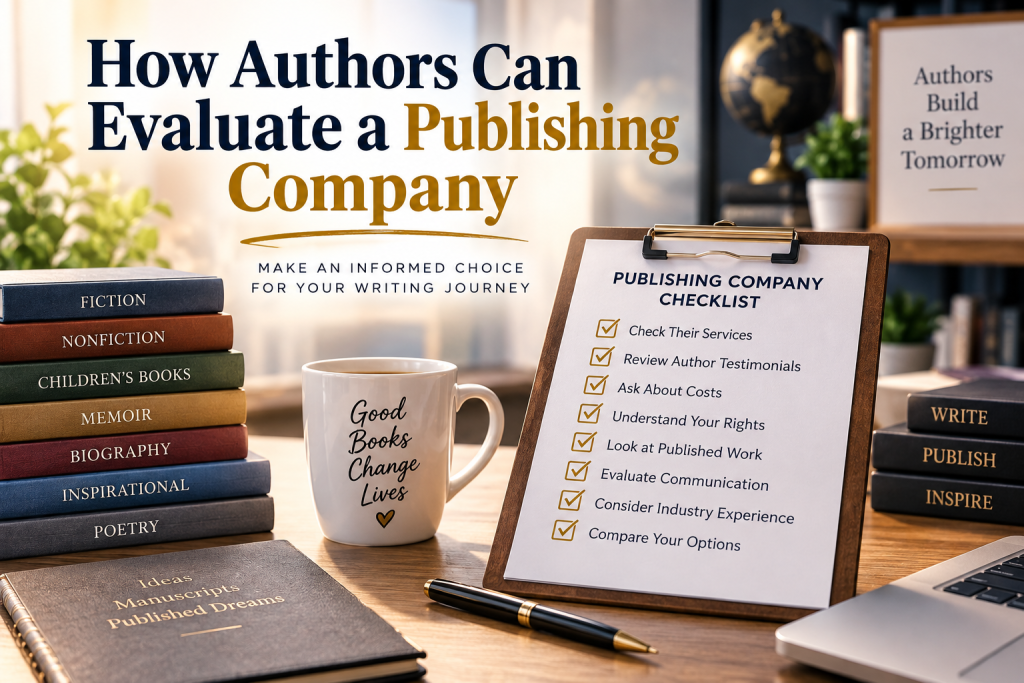
- Choosing a self-publishing partner without understanding their actual editing, design, and distribution process
Final Takeaway
Neither path is objectively better. The right choice depends on how much control, speed, and long-term ownership matter to you, versus how much you value a publisher-funded production process. Authors who understand these tradeoffs going in make far more confident decisions than those who choose based on assumptions alone.
If you’re weighing your options and want to talk through what fits your specific book and goals, a publishing consultation with the Frontline Publishing team can help you map out the clearest path forward.