Publishing a book is more accessible than ever in 2026. But one question still stops many first-time authors before they begin: how much does it cost to publish a book?
The short answer is simple: it can cost almost nothing if you handle everything yourself, or several thousand dollars if you choose professional help.
There isn’t one fixed price. Your final budget depends on your manuscript, book format, editing needs, cover design, printing, distribution, and marketing goals.
For example, a simple ebook may require very little upfront spending. A children’s picture book with custom illustrations, hardcover printing, and an audiobook can require a much larger budget.
The important thing is to know where your money is going before you start.
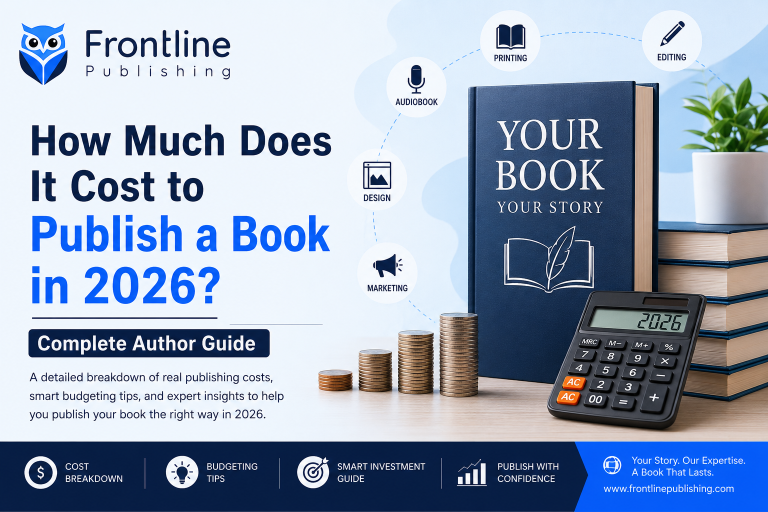
In this guide, we’ll break down the major book publishing costs 2026 authors should consider and show you how to build a realistic publishing budget.
What Determines the Cost of Publishing a Book?
Every book is different. That’s why two authors can spend very different amounts while publishing books at roughly the same time.
1. Your publishing method
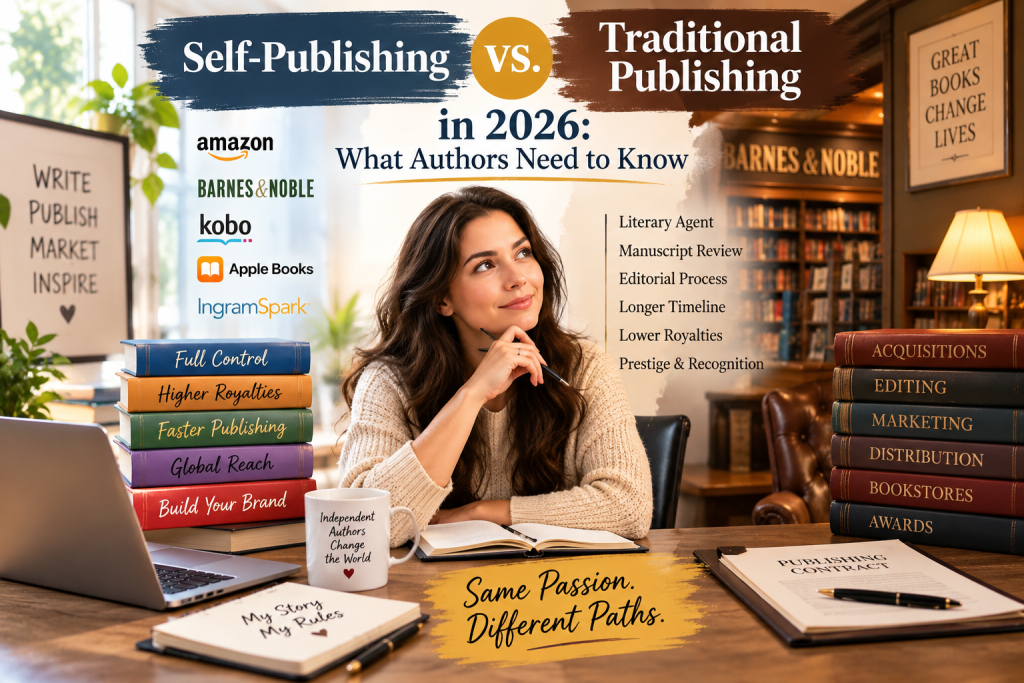
Traditional publishing and self-publishing work differently.
With traditional publishing, an author usually doesn’t pay the publisher a standard upfront publication fee. However, getting a traditional publishing deal can be competitive, and the publisher controls many parts of the process.
With self-publishing, you have more control. You also take responsibility for the costs involved in preparing and promoting your book.
2. The length of your manuscript
A 30,000-word book generally requires less editing than an 80,000-word novel. More words mean more time for an editor to review the manuscript.
3. Your book’s genre
A text-heavy novel is usually simpler to produce than a cookbook, photography book, or children’s picture book.
4. Number of formats
Do you want an ebook, paperback, hardcover, or audiobook? Producing multiple formats can increase your overall budget.
5. Your quality goals
You can do many publishing tasks yourself. But professional editing, design, and formatting can make a noticeable difference in the finished product.
Average Book Publishing Costs in 2026
There is no universal price list for publishing. Costs depend on the provider, manuscript, country, genre, and level of service.
As a practical planning guide, authors may encounter ranges such as these:
| Publishing Expense | Typical Planning Range |
| Editing | $500–$3,000+ |
| Cover Design | $100–$1,500+ |
| Formatting | $100–$800+ |
| ISBN | Varies by country/provider |
| Printing | Depends on format and quantity |
| Audiobook | $1,000–$5,000+ |
| Illustrations | $500–$5,000+ |
| Marketing | $200–$5,000+ |
These figures should be treated as planning ranges, not guaranteed prices. Current industry data shows that professional editing and design can sometimes run higher. For example, Reedsy’s 2026 data puts professional editing for an 80,000-word book at roughly $2,160–$5,040, while its median professional cover-design cost is about $930.
The good news is that you don’t have to buy every service available. Your job is to identify what your book actually needs.
The Main Costs of Publishing a Book
Let’s look at the expenses one by one.
Editing: One of the Most Important Investments
Editing is more than correcting spelling mistakes. A good editor helps make your manuscript clearer, stronger, and easier to read.
There are several types of editing.
Developmental editing looks at the bigger picture. For fiction, this can include plot, pacing, characters, and structure. For nonfiction, it may focus on organization, clarity, and whether the ideas are presented in a useful order.
Line editing focuses on the writing itself. It can improve sentences, tone, flow, and readability.
Copy editing checks grammar, punctuation, consistency, wording, and other technical details.
Proofreading is the final check. It looks for small errors that remain after the manuscript has been edited and formatted.
You may not need all four services. The right choice depends on the condition of your manuscript.
Reedsy’s current data also shows why editing prices vary so much. Rates depend on word count, genre, service type, and the professional’s experience.
A simple tip? Don’t wait until the final stage to discover that your manuscript needs major changes. Early editing can save both time and money.
Cover Design: Your Book’s First Impression
Readers often see your cover before they read your description.
A professional cover should fit your genre and communicate the feeling of the book quickly. A romance novel, business book, mystery, and children’s book all have different visual expectations.
An ebook usually needs a front cover. A printed book may also need a spine and back cover.
If you publish several formats, your designer may need to create different versions or prepare additional files.
Reedsy’s 2026 market data places the median professional cover design at around $930, although actual quotes can vary widely depending on complexity and genre.
A simple cover may cost much less. A detailed illustrated cover may cost considerably more.
Book Formatting: Making the Interior Look Professional
Formatting is the process of preparing your manuscript for its final format.
For print books, this includes:
- Page size
- Margins
- Fonts
- Chapter headings
- Page numbers
- Headers and footers
- Images
- Tables
- Spacing
Ebooks require a different approach because readers can change font size and screen settings.
Some authors can handle basic formatting themselves with the right tools. More complicated books, such as cookbooks or image-heavy publications, may benefit from professional assistance.
Reedsy notes that more intricate interior design projects can cost hundreds of dollars, while simpler formatting can be handled with free or low-cost tools.
ISBN and Publishing Setup
An ISBN is a unique identifier used for a book edition or format. ISBN rules and prices vary by country.
If you’re publishing through Amazon KDP, Amazon currently provides a ISBN option for eligible paperback and hardcover books. However, that free ISBN is tied to KDP. Authors who want to use their own ISBN can purchase one through the appropriate ISBN agency. KDP also notes that ebooks don’t require an ISBN on its platform.
Before buying anything, check the rules that apply in your country.
Printing and Print-on-Demand
Printing is another area where your publishing strategy matters.
Print-on-demand, or POD, means a book is printed when a customer orders it. This can reduce the need to purchase and store a large inventory.
That’s useful for many independent authors because you don’t have to spend thousands of dollars printing books that might sit in boxes.
Offset printing works differently. It can make more sense for larger print runs. You generally commit to a larger quantity upfront, which means a bigger initial investment but potentially lower unit costs at volume.
Ask yourself: Do I really need 1,000 copies sitting in storage, or would printing copies as orders arrive work better?
For many new authors, the second option is worth considering.
Audiobook Production
Audiobooks have become an important format for many readers.
Creating one can involve:
- Narrator fees
- Recording
- Audio editing
- Quality control
- Mastering
- Distribution
The price can vary dramatically. A short book with a simple production arrangement may cost far less than a long book with an experienced narrator and extensive production.
So, if you’re planning an audiobook, include it in your budget from the beginning rather than treating it as an afterthought.
Illustrations
Illustrated books can require a much larger investment.
This is especially true for:
- Children’s picture books
- Educational books
- Graphic books
- Cookbooks
- Activity books
- Books with custom artwork
Illustration pricing depends on the number of illustrations, artistic style, complexity, revisions, and rights involved.
A book with 30 custom illustrations is naturally going to require a different budget from a 200-page novel containing only text.
If you’re creating an illustrated book, get a clear quote that explains exactly what you’ll receive.
How Much Does It Cost to Self-Publish a Book?
Now let’s look at three simple examples.
Budget 1: DIY Publishing — $0 to $500
A highly hands-on author may keep costs low by:
- Editing the manuscript personally
- Using affordable formatting tools
- Creating a basic cover
- Handling the publishing setup
- Using print-on-demand
- Managing basic promotion personally
This approach can work, especially when an author has design, writing, or marketing skills.
However, saving money shouldn’t mean ignoring quality.
Budget 2: Professional Self-Publishing — $1,500 to $4,000
A more professional approach might include:
- Professional editing
- Custom cover design
- Interior formatting
- Publishing assistance
- Distribution setup
- Basic marketing
This range can be a useful starting point for authors who want outside assistance but don’t need a large-scale campaign.
Budget 3: Comprehensive Publishing — $4,000+
A larger publishing budget might include:
- Developmental and copy editing
- Premium cover design
- Professional formatting
- Illustrations
- Audiobook production
- Author website
- Advertising
- Publicity
- Broader distribution
These are examples, not fixed industry packages. Your actual book publishing services budget may be lower or higher depending on what your project requires.
The smartest approach is to pay for the services that improve your specific book rather than automatically choosing the most expensive option.
Where Should Authors Spend More Money?
If your budget is limited, prioritize quality where readers notice it most.
1. Editing
A strong manuscript creates a better reading experience.
2. Cover design
Your cover needs to look professional and appropriate for your genre.
3. Formatting
Readers should be able to move through the book without distracting layout problems.
4. Distribution
Choose distribution channels that actually reach your intended readers.
5. Marketing
Focus on marketing that reaches your target audience instead of spending money everywhere.
You don’t need to spend $10,000 simply because someone tells you that a bigger package is better.
Spend according to your book’s goals, not according to the size of the package.
Hidden Publishing Costs Authors Should Know
Some expenses are easy to overlook.
You may encounter costs for:
- Additional revisions
- Extra book formats
- Additional cover versions
- Illustrations
- Author websites
- Promotional graphics
- Review copies
- Shipping
- Advertising
- Launch events
- International distribution
- Taxes
- Platform or transaction fees
This is why it’s useful to keep a small emergency fund for your publishing project.
A 10–20% contingency budget can give you breathing room when something unexpected comes up.
For example, imagine that you’ve finished your book and discover that the print version needs another formatting round. If every dollar has already been spent, even a small revision can become stressful.
Planning ahead makes the process much easier.
How Technology Is Changing Publishing Costs
Technology is also changing how authors approach publishing.
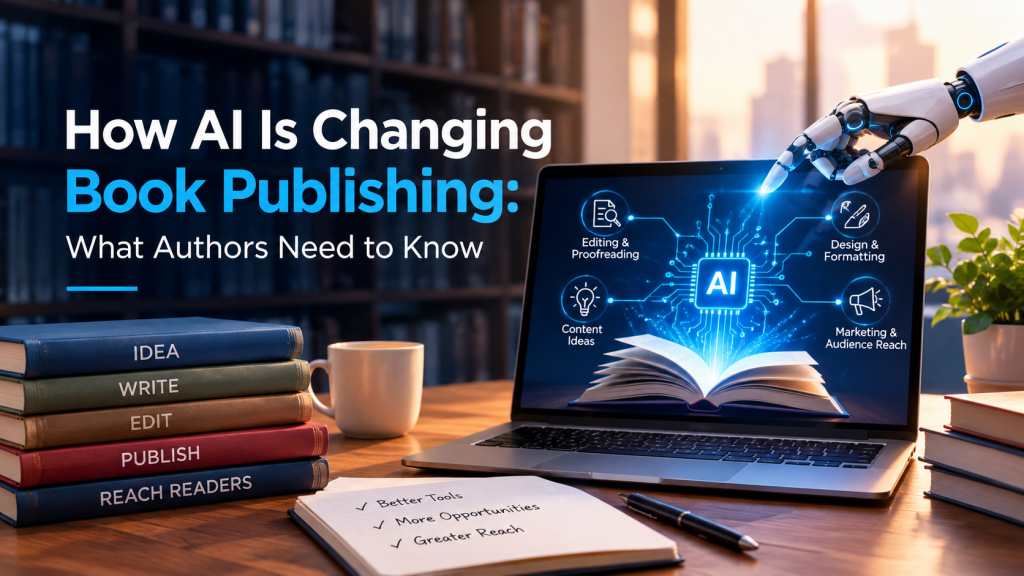
The growing conversation around AI in Book Publishing in 2026 is a good example. Authors can use AI-assisted tools for brainstorming, research organization, proofreading support, marketing ideas, and other tasks.
But AI doesn’t automatically replace professional judgment.
You still need to check facts, protect your creative voice, review generated material, and understand the rules of the platforms where you publish. AI-assisted and AI-generated content can also raise different questions around disclosure and rights.
If you’re exploring this subject further, our discussion of AI in Book Publishing in 2026 can help you think about where AI may fit into a responsible publishing workflow.
The goal isn’t simply to use technology because it’s available. The goal is to use the right tool for the right task.
Choosing the Right Book Format
Your format can also influence your publishing budget.
The discussion around Ebooks vs. Audiobooks vs. Print is especially important when you’re deciding where to spend your money.
An ebook can have relatively low production costs once the manuscript and cover are ready. Print books introduce physical production considerations. Audiobooks add narration and audio-production expenses.
That doesn’t mean you have to choose only one.
Many authors eventually release multiple formats. The better question is: Which format makes sense for your readers and your budget right now?
If you’re comparing formats in more detail, Ebooks vs. Audiobooks vs. Print can help you think about the advantages of each before committing your budget.
What About Publishing on Amazon?
Amazon is an important consideration for many independent authors.
Book Publishing on Amazon can be attractive because KDP allows authors to publish ebooks and print books without maintaining a traditional inventory. Authors can upload their files, set book details, choose pricing, and make their work available through Amazon.
However, publishing on a major retailer doesn’t remove the need for a good manuscript, professional presentation, or marketing strategy.
Authors should also understand the difference between publishing a book and building demand for it.
A book can be available for sale without automatically attracting readers.
Our guide to Book Publishing on Amazon explores the process in greater detail for authors who want to understand how the platform fits into a broader publishing strategy.
How to Create a Smart Book Publishing Budget
Before spending money, take a few minutes to create a simple plan.
Step 1: Define your goal
Do you want to publish mainly for family and friends, build a professional author career, reach bookstores, or create a long-term series?
Your answer affects your budget.
Step 2: Choose your formats
Decide whether you need:
- Ebook
- Paperback
- Hardcover
- Audiobook
Step 3: List essential services
Separate what you can confidently do yourself from what you need professional help with.
Step 4: Compare quotes
Don’t accept the first quote automatically. Ask what is included and what costs extra.
Step 5: Separate production from marketing
Editing and formatting prepare the book. Advertising and promotion help readers discover it. These are different expenses.
Step 6: Keep a contingency fund
Leave some money available for unexpected needs.
This simple approach can prevent your publishing budget from getting out of control.
Questions to Ask Before Paying a Publisher
Before signing an agreement, ask clear questions.
- What exactly is included in the price?
- Are editing and proofreading included?
- Who owns the copyright?
- Who owns the ISBN?
- Where will the book be distributed?
- Are there additional fees?
- What marketing is included?
- How many revisions are included?
- What happens after publication?
- Can I receive a complete cost breakdown?
Don’t be afraid to ask for clarification.
A trustworthy publishing partner should be willing to explain what you’re paying for. Frontline Publishing is one example of a publishing company authors may research when comparing professional support, services, and publishing options.
It’s also useful to research independent experiences. Looking at frontline publishing reviews can help prospective authors understand what other customers say about their experiences, although reviews should always be considered alongside the actual services, agreement, and project requirements.
Final Takeaway: What Should You Budget to Publish a Book?
So, how much does it cost to publish a book in 2026?
There isn’t one universal answer.
A determined DIY author may publish with very little upfront spending. An author who wants professional editing, design, formatting, distribution, marketing, and additional formats may spend several thousand dollars.
The most important thing is to build your budget around your book, not someone else’s publishing package.
Think carefully about your audience. Choose the formats that make sense. Invest in editing and presentation. Be cautious about unnecessary services. And always ask what you’re getting before you pay.
If you’re publishing a book for the first time, the process may seem complicated at first. But once you break it into individual steps, the costs become much easier to understand.
You can also explore frontline publishing when comparing professional publishing options and see how different services may fit your goals and budget.
Finally, when researching any publishing provider, take time to read frontline publishing reviews and compare the information with the company’s services, terms, and communication.
Your first book doesn’t need the biggest possible budget. It needs a smart budget one that puts your money where it can make the greatest difference.
After all, publishing a book isn’t simply about getting a file onto a retailer’s website. It’s about creating a book you’re proud to put your name on and giving readers a reason to pick it up.